
Transportation & Logistics
AI Solutions
iSkylar builds custom AI software for freight forwarders, 3PLs, fleet operators and shippers, from route optimization and demand forecasting to document automation and AI dispatch agents. Projects typically cost $20,000–$300,000+ and run 10 weeks to 12 months, integrating with your existing TMS, WMS and ERP.
Get Your Transportation & Logistics Solution
Share your requirements — we'll create a custom Transportation & Logistics solution for you.
How is AI changing transportation and logistics?
AI is moving logistics from reactive reporting to automated, real-time decisions: rerouting vehicles, forecasting demand and reading shipping documents without manual keying. Markets and Markets projects the AI in supply chain market growing from $13.93 billion in 2025 to $50.41 billion by 2032.The pressure behind that growth is practical. Operators run fragmented stacks of TMS, WMS, ERP and carrier portals, handle paper-heavy documents, and plan against volatile capacity. Most do not need a rip-and-replace. They need an AI layer on top of the systems they already run. iSkylar is an AI-first software development company with teams in Jaipur, Bangalore and Quincy, Massachusetts, serving clients across the US, UK, Australia, Canada and the UAE. We build that layer through custom AI development and AI agent development, delivered on top of custom software engineering that fits your operation. Our closest production example is TenderCentriX: an AI matching engine with live API integrations (TED Europa, Sell2Wales, OpenAI), built on React Native, Node.js, Python and Lang Chain, the same building blocks we use for logistics.
Which compliance rules apply to logistics AI?
Region Rules to plan for what we build in United States FMCSA electronic logging device (ELD) rules; CBP ACE for customs data; state privacy laws such as CCPA Driver-data handling, audit logs, customs-document extraction mapped to ACE fields United Kingdom UK GDPR and Data Protection Act 2018; HMRC Customs Declaration Service (CDS)Data minimization, UK data residency options, CDS-ready document data European Union GDPR; EU AI Act (human oversight, documentation, conformity assessment for high-risk systems)Explainable outputs, human approval steps, model and decision documentation Canada PIPEDA Consent-aware data pipelines and access controls Australia Privacy Act 1988 and Australian Privacy Principles Role-based access and cross-border data handling controls UAE Federal Decree-Law No. 45 of 2021 (Personal Data Protection Law)In-region hosting options and consent and retention controls
Design considerations, not legal advice. Confirm your obligations with legal counsel.
How much does AI logistics software cost?
Tier Typical investment Timeline What is included MVP / Pilot$20,000–$60,00010–14 weeks One AI use case (route optimization or document extraction), operations dashboard, 1–2 system integrations Mid-size platform$60,000–$130,00016–24 weeks Core app plus AI layer, TMS or WMS integration, real-time tracking, analytics and reporting Enterprise platform$200,000–$300,000+6–12 months Multi-module platform, multi-system integrations, AI agents, role-based access, dedicated team
Indicative ranges based on published market benchmarks for AI logistics software. Your quote follows a discovery and data audit.
Core Infrastructure Features
Integration-First Architecture
Real-Time Data Pipelines
Explainable, Human-in-the-Loop AI
Secure Multi-Region Cloud
The Three Pillars of the System
Transportation & Fleet
- Route and ETA optimization
- Dynamic dispatch
- Predictive maintenance
- Driver and fleet analytics
Warehouse & Supply Chain
- Demand forecasting
- Inventory optimization
- Warehouse slotting and picking
- End-to-end shipment visibility
Freight & Customer Operations
- Freight document processing
- Customs data extraction
- AI customer-support agents
- Quote and rate automation
AI-Driven
Optimization
AI Route & ETA Optimization
Demand & Capacity Forecasting
Document & Customs Automation
AI Dispatch & Freight Agents
The Technology Frontier
The Delivery Lifecycle
Discovery & Data Audit
Architecture & Model Design
Agile Build & Pilot
Rollout & Optimization
Investment & Pricing
For logistics operators and 3PLs launching a first AI use case such as route optimization or document extraction, typically in 6-8 weeks.
- One AI use case (route optimization or document extraction)
- Operations dashboard
- 1–2 system integrations (TMS WMS or ERP)
- Cloud deployment on AWS
- Post-launch support
For multi-region operators needing a multi-module platform with AI agents and deep system integrations, typically in 3-4 months.
- All Growth features
- Multi-system integrations
- AI dispatch and document agents
- Role-based access and audit logs
- Dedicated engineering team
- Compliance-ready design for US UK EU and UAE
* Note: Final costs vary based on feature complexity, platform choices, and specific API integrations. Get an exact quote for your project.
Success Stories
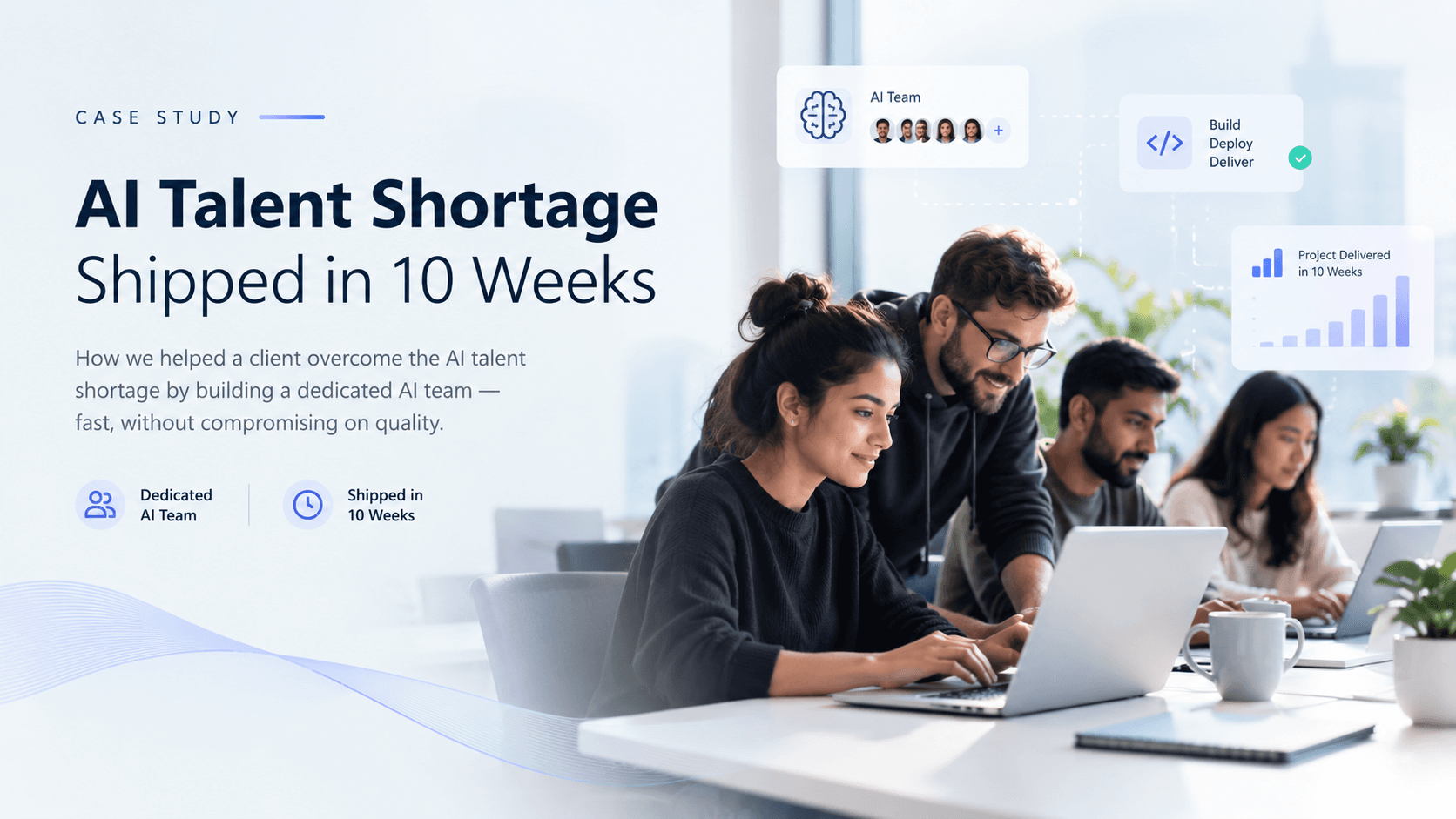
SAAS / AI DEVELOPMENT
How a SaaS Company Shipped Its Stalled AI Roadmap in 10 Weeks Without Hiring a Single AI Engineer
10 Weeks — To Production
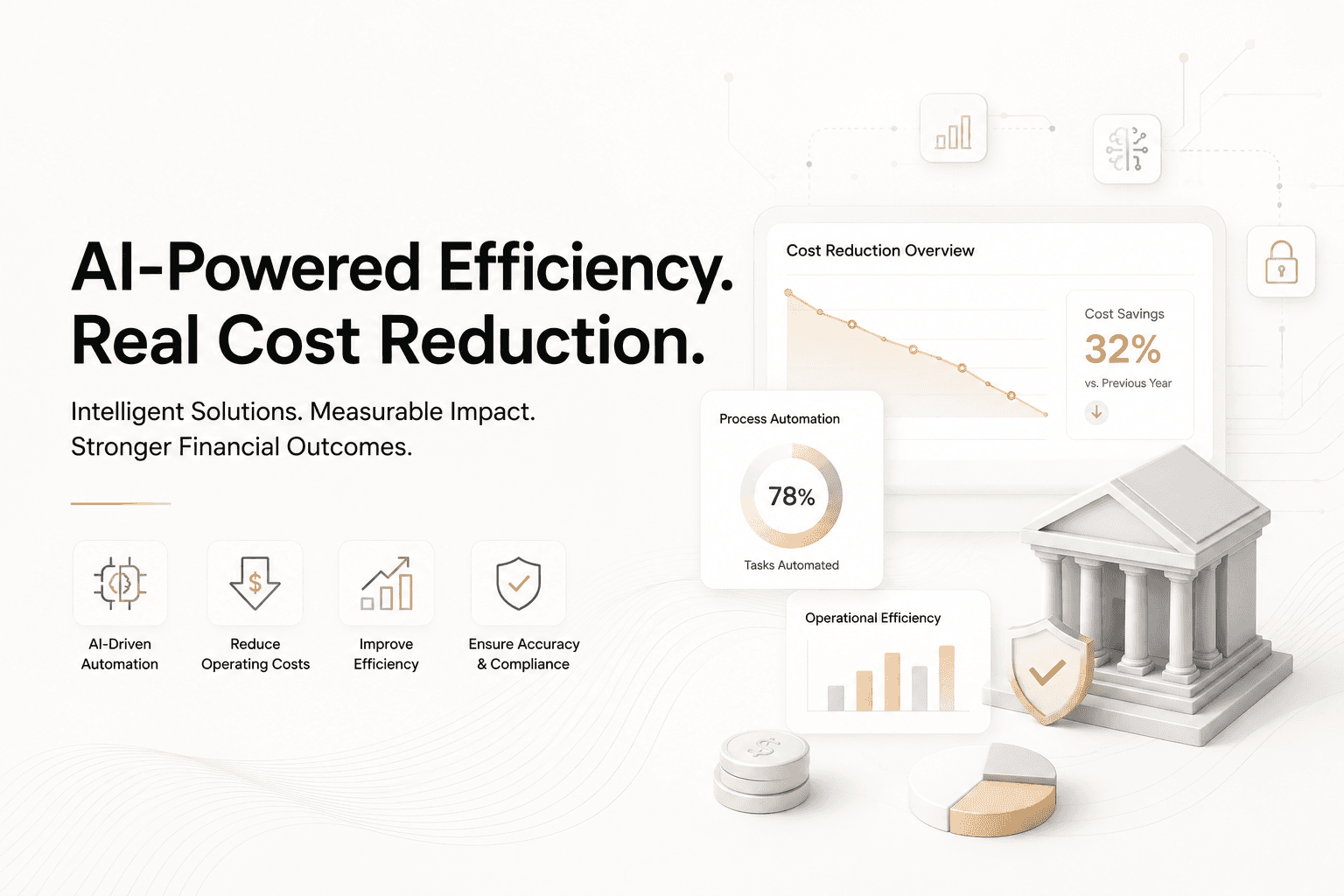
FINANCIAL SERVICES
How a Financial Services Company Cut AI Costs by 73% While Improving Response Speed: The Hybrid SLM + LLM Strategy
8 weeks — Time to Production
Frequently Asked Questions
How much does it cost to build AI logistics software?
How long does it take to develop an AI logistics platform?
Can your AI work with our existing TMS, WMS and ERP?
What data do we need to start?
What are AI agents in logistics and what can they do?
Which regulations affect AI in logistics?
Will we own the code, and is our data kept confidential?
Do you provide support after launch?
Ready to launch your vision?
Get a comprehensive development roadmap and fixed-price proposal within 48 hours.