Build Smarter Products with AI-FirstSoftware Development
We deliver custom AI solutions, mobile and web development, and staff augmentation for enterprises across US, UK, and Australia. Faster delivery, proven expertise, measurable results. Just real technology that works.
TRUSTED BY GLOBAL VISIONARIES
Top Reasons Why Global Companies Trust iSkylar
Trusted by industry leaders, iSkylar delivers rapid, measurable results. We provide custom AI solutions, mobile and web development, and staff augmentation across US, UK, and Australia. Our proven expertise and dedicated team are committed to your success. Whether you need rapid delivery, proven technology, or flexible team scaling, we partner with you to deliver real impact
Unmatched Speed
Our modular engineering framework accelerates MVP development by 40%. You hit the market while the window is open not after. Rapid delivery means competitive advantage
Cost Efficient
Strategic resource allocation and cloud-native architectures reduce long-term operational overhead by up to 25%. Staff augmentation teams cost 40-60% less than in-house hiring.
Custom AI Solutions
We don't just plug in APIs we build custom fine-tuned LLMs and prediction engines trained on your data. Real AI tailored to your industry, not generic templates.

Build a Product
From napkin sketch to global scale. Our end-to-end engineering team handles architecture, design, and deployment with rapid delivery. We take the complexity out of custom software development.
Use Staff Augmentation Teams
Augment your existing team with specialized talent in AI, Cloud, and Web Architecture. Scale fast. No hiring overhead. Rapid onboarding in 2-4 weeks.
Custom AI Solutions
We build custom AI solutions that solve your real business challenges from conversational interfaces to autonomous workflow automation. Our team delivers production-ready AI, not just API integrations or generic templates
.png&w=48&q=75)
Agentic AI Services
Autonomous AI agents that plan, execute and optimize multi-step business workflows without waiting on a human for every click
.png&w=48&q=75)
Prediction & Purpose-Built Models
Generative AI
.png&w=48&q=75)
Chatbot Development
Solutions for Every Tech Challenge
View All Solutions →Engineering Excellence



Industries We Serve
.png&w=48&q=75)
Banking & Finance
.png&w=48&q=75)
Digital Commerce
.png&w=48&q=75)
E-Commerce, Retail & B2B
.png&w=48&q=75)
EDTech
Food & Restaurant
Health Care & Life
.png&w=48&q=75)
On Demand
.png&w=48&q=75)
Social Media
Case Studies That Might Interest You
Dive into our skilled developers' work.
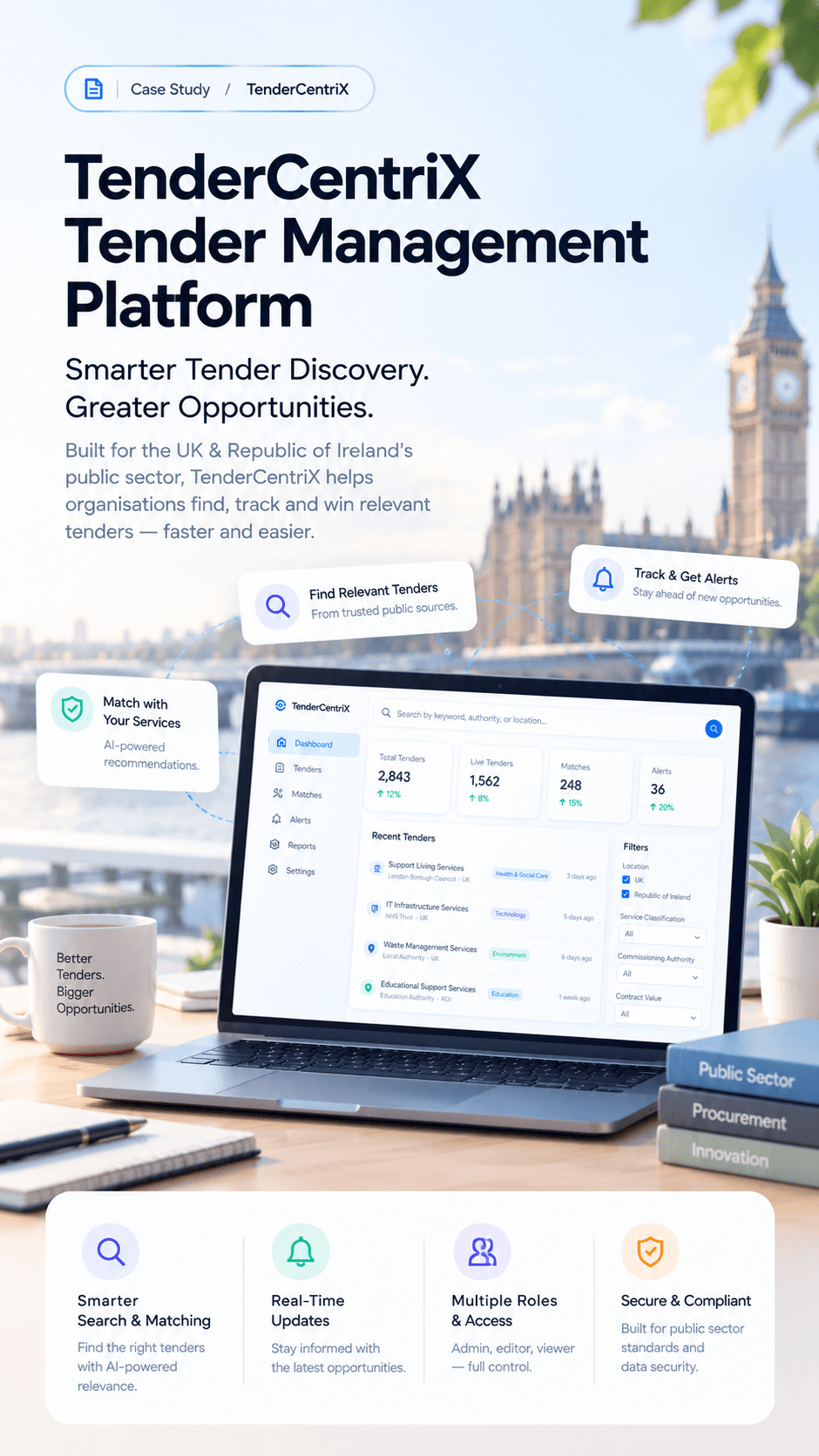
TenderCentriX: AI-Powered Tender Management & Procurement Intelligence Platform
Requirement
TenderCentriX is an AI-powered tender management and procurement intelligence platform that centralizes tender discovery, eligibility analysis, deadline tracking and bid management in one dashboard. It helps businesses find, qualify and win more public and private tenders with less manual effort and higher bid accuracy.
Results
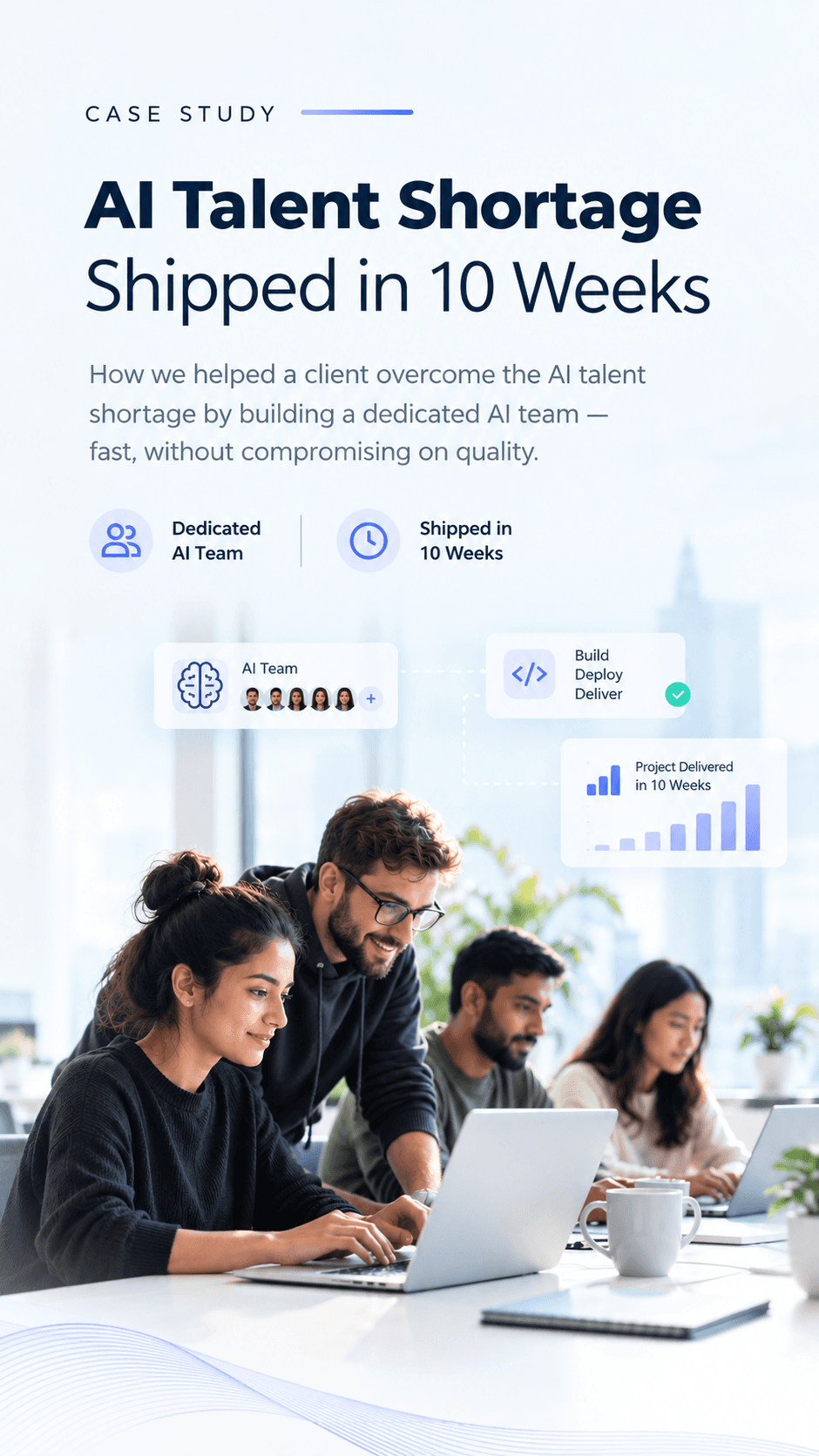
How a SaaS Company Shipped Its Stalled AI Roadmap in 10 Weeks Without Hiring a Single AI Engineer
Requirement
Two AI roles sat open for 5 months. See how a dedicated AI team shipped a production RAG copilot in 10 weeks, at a fraction of the cost of hiring in-house.
Results
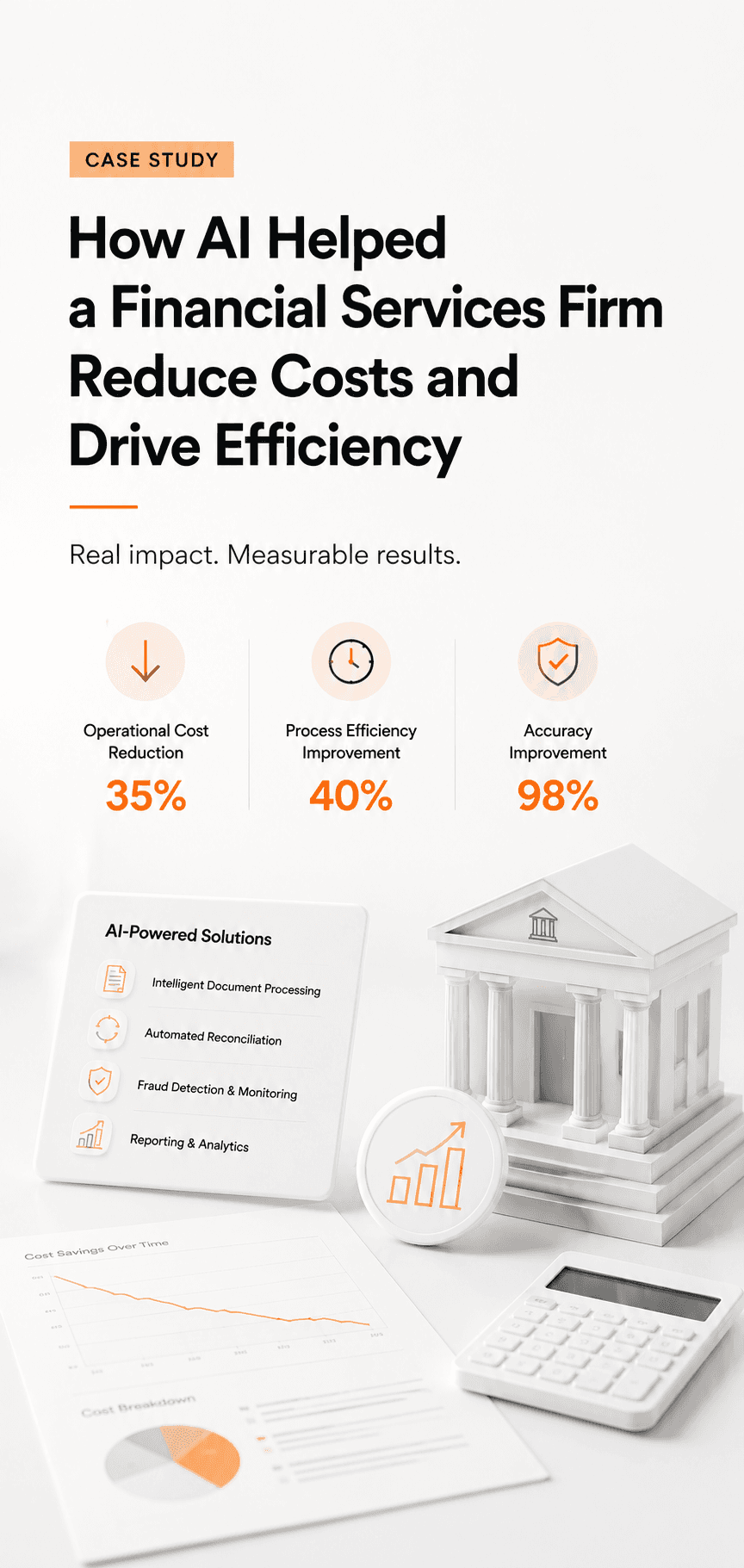
How a Financial Services Company Cut AI Costs by 73% While Improving Response Speed: The Hybrid SLM + LLM Strategy
Requirement
A global financial services company reduced annual AI infrastructure costs by 73% ($3.1M in savings) while cutting customer service response latency from 2-3 seconds to 45 milliseconds. By implementing a hybrid SLM + LLM architecture with intelligent model routing and on-premise deployment, they achieved 100% data residency compliance while improving customer satisfaction by 34%.
Our Solution
The Hybrid SLM + LLM ArchitectureRather than rip-and-replace their entire AI stack, the company implemented a tiered, intelligent routing strategy that deployed small language models (SLMs) for high-volume, low-complexity tasks while preserving frontier LLMs for genuinely complex reasoning.Key implementation components:Semantic Router Layer: Built a lightweight classification model that analyzed incoming queries and routed them to the appropriate AI tier, 80% to fine-tuned SLMs, 20% to frontier LLMs. The router was engineered to make routing decisions in <10ms.Fine-Tuned SLMs on Proprietary Data: Selected open-source SLM architectures and fine-tuned them on 18 months of internal customer service conversations, FAQs, and document processing patterns. This allowed the smaller models to handle domain-specific tasks with high accuracy.On-Premise Deployment: Deployed SLM inference on company-managed GPU infrastructure, eliminating all external API calls for routine workloads. This satisfied data residency requirements.Retrieval Augmented Generation (RAG) Layer: Integrated a RAG pipeline for document-based queries, reducing hallucinations and ensuring responses were grounded in actual customer documentation and product specifications.Hybrid Fallback Logic: Implemented automatic fallback routing, if an SLM confidence score fell below a defined threshold, the query was escalated to a frontier LLM with full context preserved.Timeline & Execution: From decision to full production deployment took 12 weeks, including 4 weeks of data labeling and SLM fine-tuning, 3 weeks of semantic router optimization, and 5 weeks of staged rollout and monitoring.
Results
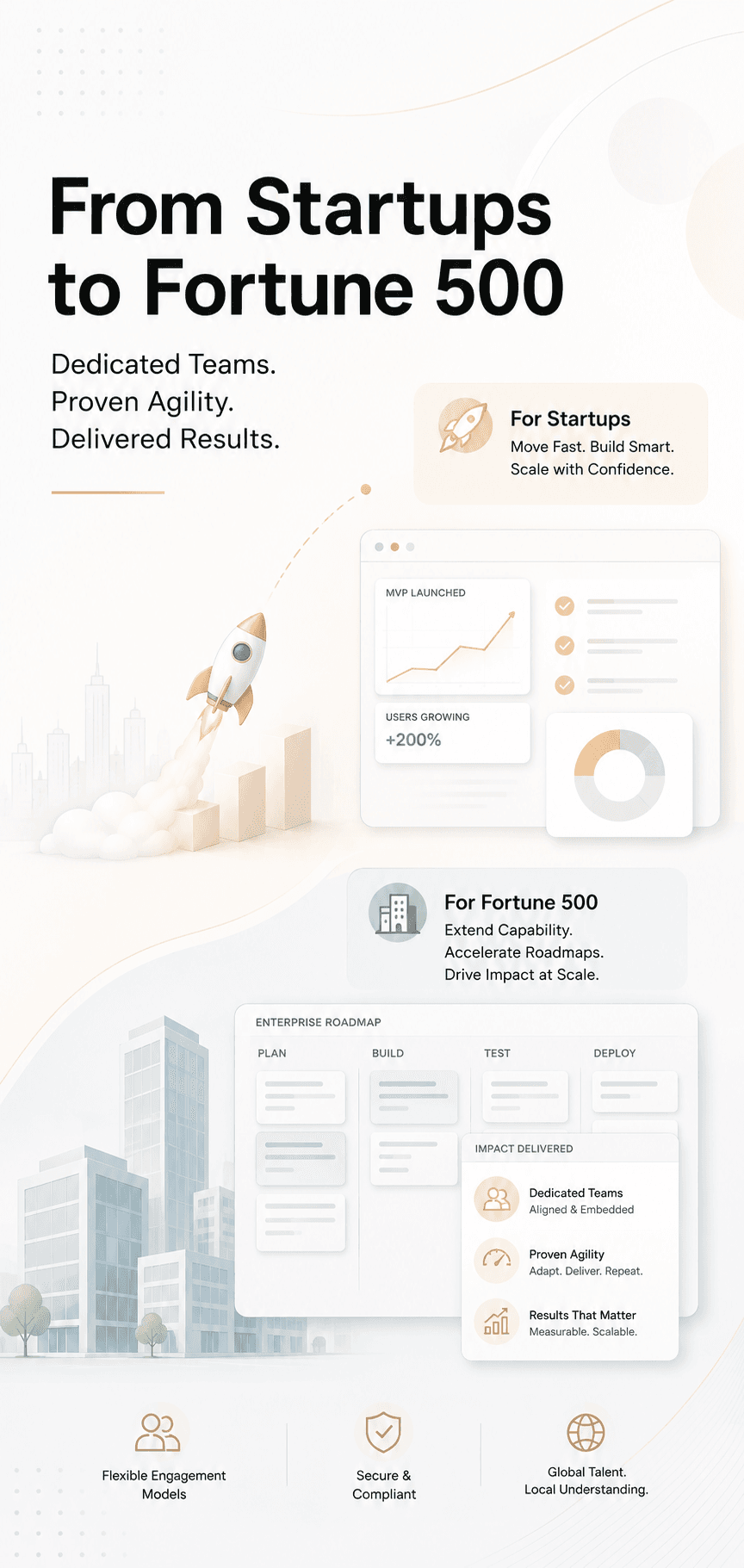
How a Pre-Seed Startup Built Product + Series A in 120 Days Using Dedicated Teams
Requirement
A pre-seed startup hired a dedicated development team to ship an MVP in 12 weeks three times faster than hiring in-house and closed a $2.5M Series A on product viability. Simultaneously, a Fortune 500 company adopted a hybrid model (in-house + dedicated teams) to unblock a stalled roadmap, shipping features 60% faster while reducing engineering costs by 15%.
Results
Enterprise Legacy Modernisation with AI: An iSkylar System Modernisation Case Study
Requirement
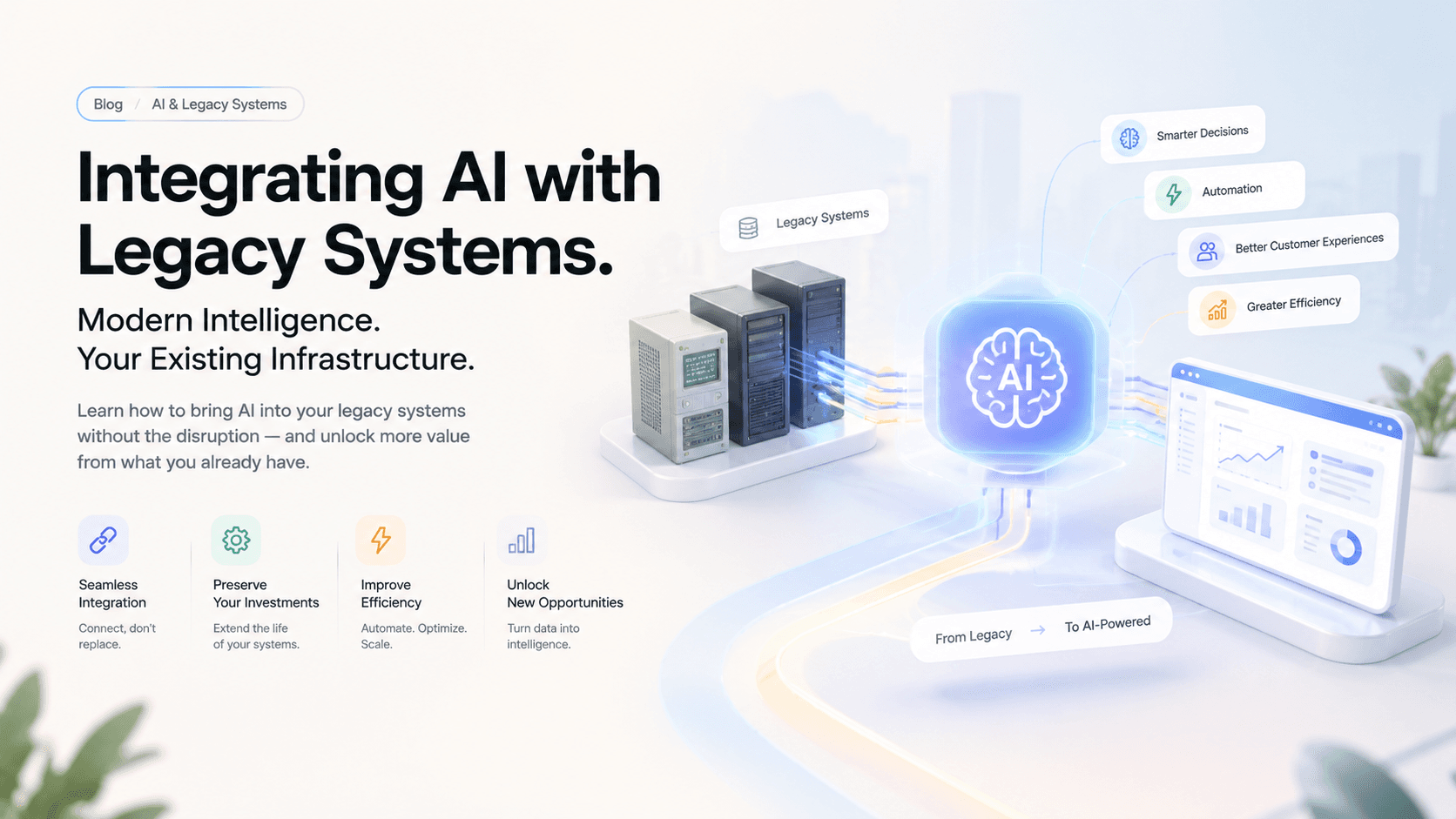
This case study documents how iSkylar Technologies approached an enterprise legacy system modernisation engagement, migrating a monolithic Oracle and .NET Framework platform to a cloud-native, API-first architecture on AWS with Snowflake, PostgreSQL and React. The migration ran across three phases with zero production downtime and delivered three AI capabilities in production that were architecturally impossible on the legacy stack. It covers the full modernisation approach: phased delivery, compliance management, what failed and the business outcomes that followed.
Results
How to Scale a Digital Agency Without Hiring: iSkylar White-Label Delivery Case Study
Requirement
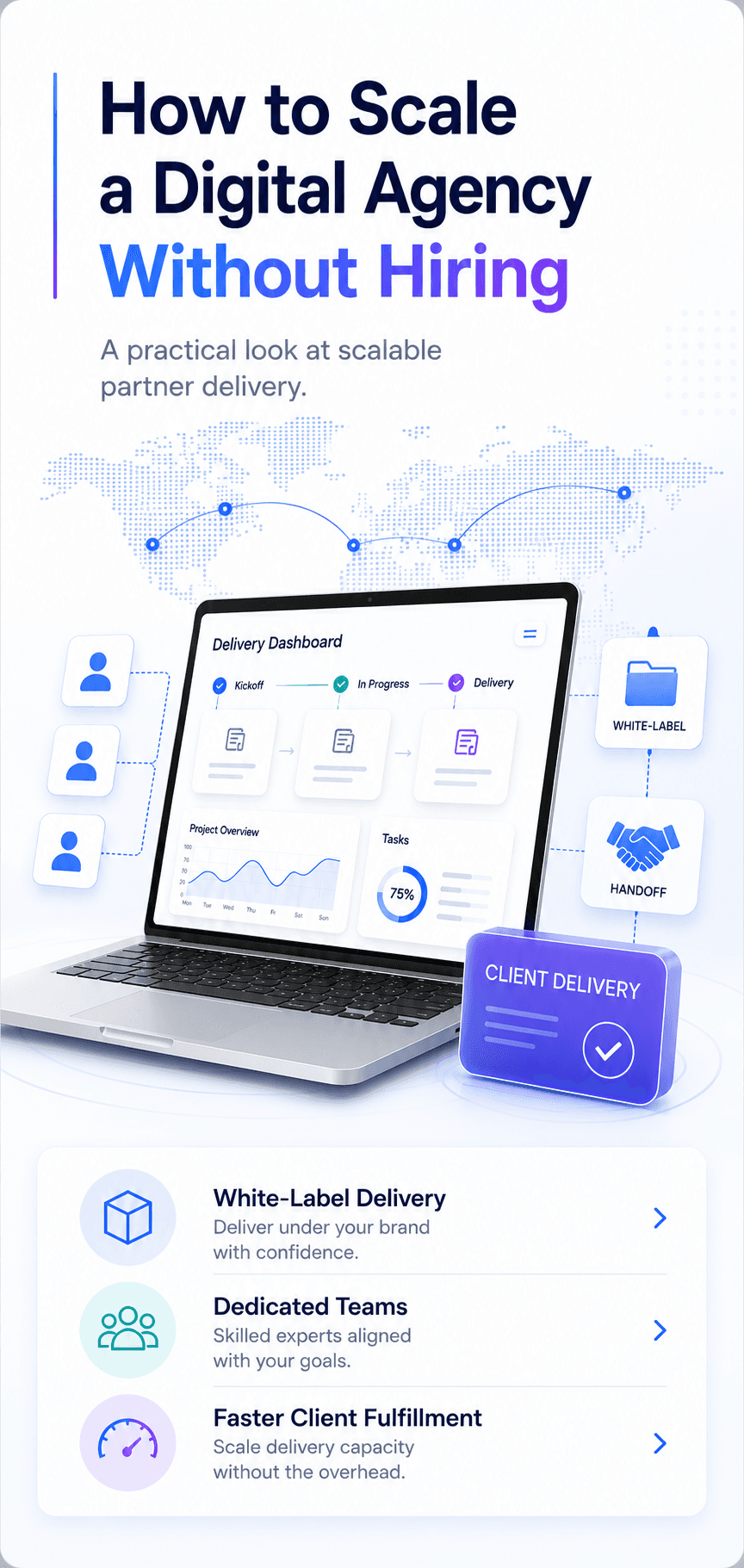
This case study documents how a US-based digital agency scaled from $480,000 to $1.2 million in annual revenue over 12 months, adding zero full-time hires, by partnering with iSkylar Technologies as its white-label delivery engine. Profit margins grew from 24% to 41%, project delivery capacity tripled, and client retention improved from 68% to 89%. It covers the full agency growth white-label model: partnership structure, delivery workflows, real financial results and honest failures.
Results
Find Your Perfect Tech
Solution in 60 Seconds
Answer a few quick questions and get a personalized recommendation for your project needs.
Which industry does your business belong to?
Select the industry that best matches your business.
Built with Intention. Launched with Impact.
With a refined blend of creativity, technology, and precision, we guide you from concept to launch, delivering products that perform.
Discovery
We listen, learn, and explore what makes your idea tick. Deep dive into your business logic, user personas, and technical constraints.
Design
We turn ideas into beautiful, functional experiences. Defining the stack, AI model selection, wireframes, and MVP roadmap.
Develop
From prototype to product, we bring your vision to life in code. Rapid sprints with weekly tangible demos and continuous integration.
Deploy
Launch, test, refine your product, ready for the world. Edge-case simulation, security audits, and infrastructure handover.
Discovery
We listen, learn, and explore what makes your idea tick. Deep dive into your business logic, user personas, and technical constraints.
Design
We turn ideas into beautiful, functional experiences. Defining the stack, AI model selection, wireframes, and MVP roadmap.
Develop
From prototype to product, we bring your vision to life in code. Rapid sprints with weekly tangible demos and continuous integration.
Deploy
Launch, test, refine your product, ready for the world. Edge-case simulation, security audits, and infrastructure handover.
Voices of
Transformation
“iSkylar didn't just build us an app; they architected a future-proof data ecosystem that redefined how we interact with our customers.”

“The AI integrations they delivered were surgical. They understood our domain constraints better than our in-house consultants.”