AI Agent Security in 2027: A 12-Point Guardrails Checklist for Production
AI agents now act on your systems, so security decides whether they scale. This 2027 checklist maps 12 production guardrails to the OWASP agentic risks, sets measurable go-live targets, covers rules in the USA, UK, UAE, KSA, Canada and Australia, and prices the work.
Himanshu
PRINCIPAL ARCHITECT10 MIN READ

AI agent security means giving every agent its own identity, the smallest set of tools and permissions it needs, human approval for high-impact actions, filters for untrusted input and output, full trace logs and a tested kill switch. Map these controls to the OWASP Top 10 for Agentic Applications (ASI01 to ASI10). For one production agent, a guardrail build typically costs $7,000 to $20,000 and takes 2 to 3 weeks; a full first-year security programme for a multi-agent system runs about $1,000 to $210,000+.
AI agents no longer just answer questions. They read inboxes, call APIs, update CRMs, issue refunds and write code. That is exactly why AI agent security has become the deciding factor between a pilot that scales and a pilot that gets switched off. In a 2026 Salt Security survey of 380+ organisations, 49.8% said an AI agent had taken an unintended or unauthorised action in the past 12 months, yet only 17.5% could stop a misbehaving agent automatically.
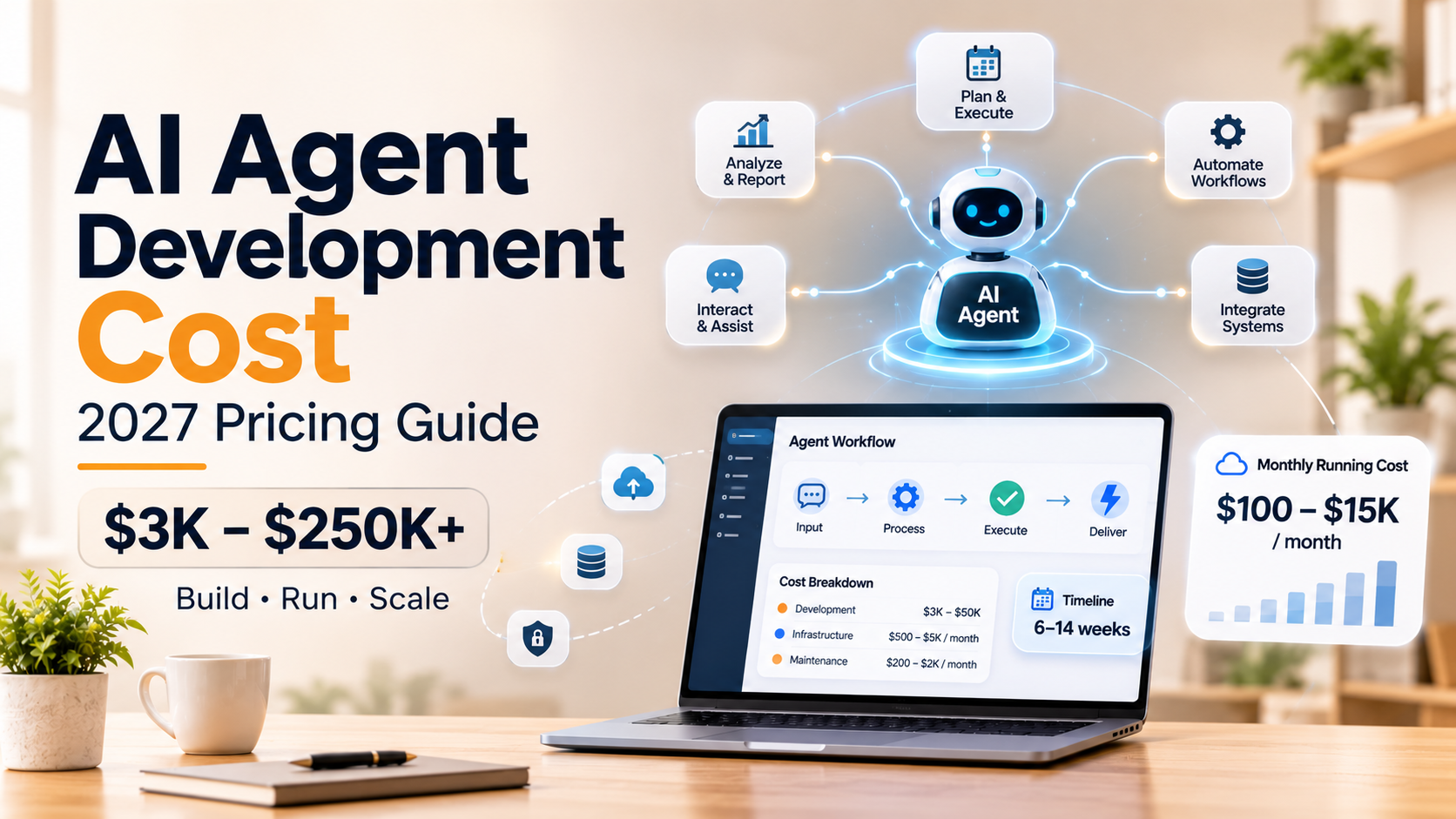
This guide gives you a production checklist of 12 guardrails, each mapped to the OWASP agentic risk it addresses, measurable go-live criteria, the rules that apply in the USA, UK, UAE, Saudi Arabia, Canada and Australia, and realistic 2027 costs. If you are still scoping the agent itself, start with our AI agent development cost guide.
What is AI agent security?
AI agent security is the set of identity, access, input, output, monitoring and response controls that stop an autonomous AI system from being manipulated, overreaching its permissions or causing harm when it acts on your systems. Classic LLM safety focuses on what a model says. Agent security focuses on what a model does: which tools it can call, with whose credentials, on which data, and who can stop it.
Guardrails are the practical controls inside that programme: input screening, tool allowlists, approval steps, output filters, rate limits and kill switches.
Why AI agent security matters more in 2027
Agent numbers are exploding. Gartner (April 2026) expects the average Fortune 500 company to run more than 150,000 agents by 2028, up from fewer than 15 in 2025, while only 13% of organisations believe they have the right agent governance in place.
Incidents are rising. Gartner (April 2026) predicts that by 2028, 25% of enterprise generative AI applications will suffer at least five minor security incidents a year, up from 9% in 2025.
Access control is the weak point. IBM's Cost of a Data Breach Report 2025 found 13% of organisations reported breaches of AI models or applications, and 97% of those lacked proper AI access controls. Shadow AI added about $670,000 to the average breach cost.
Adoption outpaces approval. Gravitee's State of AI Agent Security 2026 report (900+ respondents) found 88% had confirmed or suspected agent security incidents and only 14.4% sent all agents live with full security approval.
Prompt injection is not going away. OpenAI said in December 2025 that prompt injection is unlikely ever to be fully solved, and the UK NCSC says it may never be totally mitigated. You design around it, you do not wait for a fix.
The OWASP Top 10 for Agentic Applications (2026) in plain English
OWASP published its first agent-specific risk list in December 2025. It is fast becoming the common language between engineering, security and auditors, so map every control you build to it.
ID | Risk | What it looks like in practice |
|---|---|---|
ASI01 | Agent Goal Hijack | A hidden instruction in an email, web page or PDF redirects the agent's task. |
ASI02 | Tool Misuse and Exploitation | The agent calls a legitimate tool with harmful arguments, such as a bulk delete. |
ASI03 | Identity and Privilege Abuse | The agent runs on a shared admin key and can reach far more than its task needs. |
ASI04 | Agentic Supply Chain Vulnerabilities | A compromised plugin, MCP server, model or package enters the agent's toolchain. |
ASI05 | Unexpected Code Execution | Generated code runs outside a sandbox and touches production. |
ASI06 | Memory and Context Poisoning | Bad data written to long-term memory or a knowledge base steers future sessions. |
ASI07 | Insecure Inter-Agent Communication | One agent trusts unsigned or spoofed messages from another. |
ASI08 | Cascading Failures | One faulty step triggers a chain of automated actions across systems. |
ASI09 | Human-Agent Trust Exploitation | Users approve whatever the agent proposes because it sounds confident. |
ASI10 | Rogue Agents | An agent drifts from its intended behaviour and keeps acting without detection. |
The AI agent security checklist: 12 guardrails for production
Use this as your go-live gate. Each item names the OWASP risk it reduces.
Give every agent its own identity (ASI03). No shared service accounts or personal tokens. Register each agent like a workload identity with an owner, purpose and expiry date.
Enforce least privilege with short-lived credentials (ASI03, ASI02). Scope tokens to the exact records and actions needed, issue them per task, and keep secrets out of prompts and logs.
Allowlist tools and validate arguments (ASI02). The agent can only call approved functions, and every argument is checked against a schema, value limits and business rules before execution.
Treat all external content as untrusted (ASI01). Separate system instructions from retrieved data, strip or flag hidden instructions, run a prompt-attack classifier on inputs, and never let retrieved text change the agent's permissions.
Control memory writes (ASI06). Record the source of everything stored, expire stale memory, and require validation before content enters a shared knowledge base. Our RAG vs fine-tuning guide covers knowledge base design.
Sandbox any code the agent writes or runs (ASI05). Isolated containers, no production credentials, network egress limits and time caps.
Put humans on high-impact actions (ASI09). Payments, refunds above a threshold, data deletion, external emails and permission changes need explicit approval, with the agent showing what it will do and why.
Filter outputs. Redact personal data, block policy-violating content and run grounding checks so answers match source documents.
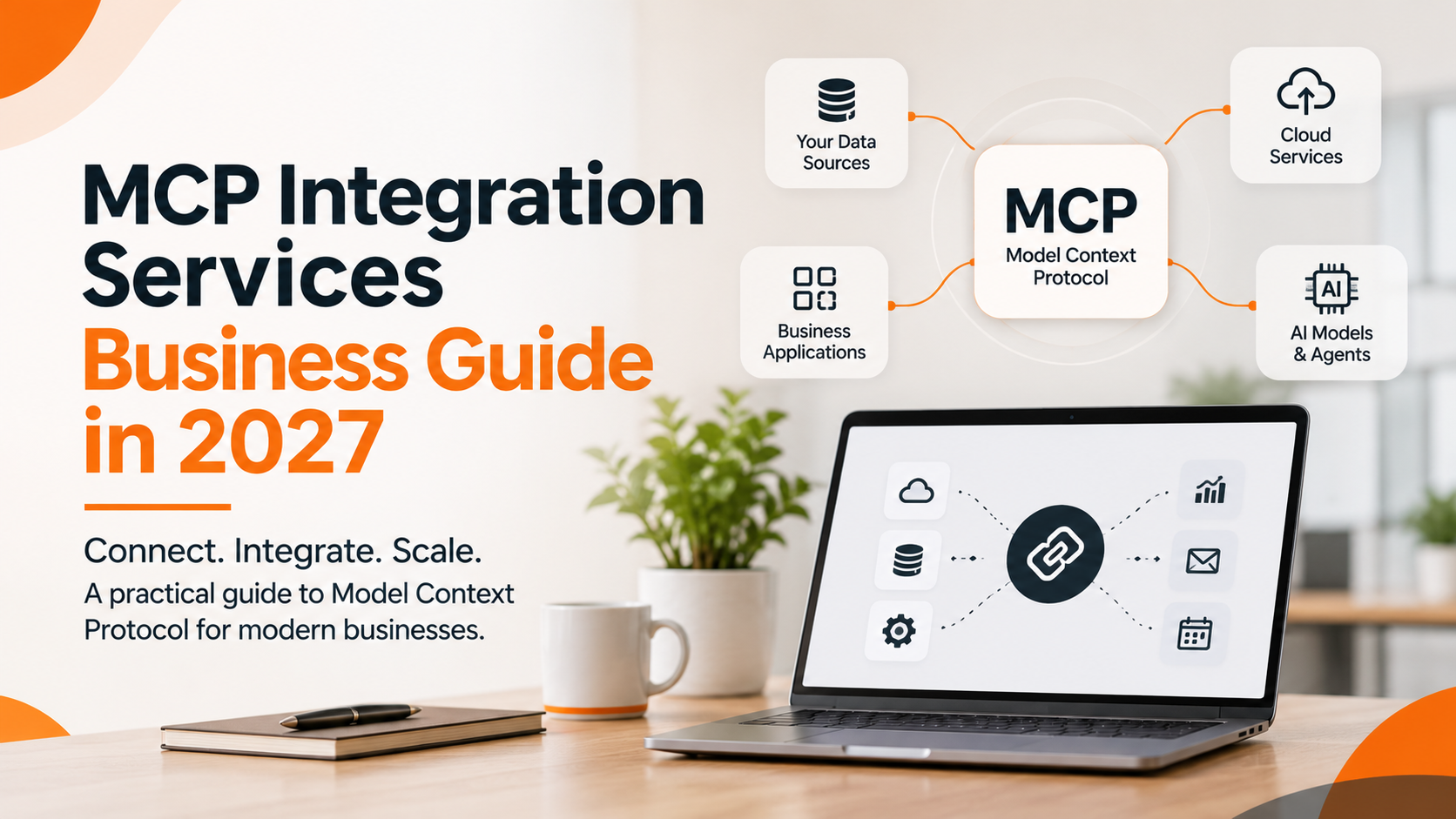
Vet your supply chain (ASI04). Pin model versions, review every plugin and MCP server before connecting it, and keep a software bill of materials. For MCP specifically, follow the controls in our MCP integration guide.
Authenticate agent-to-agent traffic (ASI07). Sign and verify messages between agents and never let one agent inherit another's privileges by default.
Add budgets, rate limits and a kill switch (ASI08, ASI10). Cap actions, spend and tokens per task and per day, add circuit breakers between systems, and test that one command stops every running instance.
Log every step, evaluate and red team continuously (ASI10). Trace prompts, tool calls, approvals and outputs with the agent ID; run a regression suite of attacks on every release; and keep an incident runbook that says who can pause, roll back and notify.
Go-live acceptance criteria you can actually measure
Most checklists stop at "add monitoring". Auditors and boards want numbers. These are the targets we recommend before an agent touches production data:
Control | Recommended go-live target |
|---|---|
Trace logging | 100% of tool calls logged with agent ID, user, inputs and result |
Kill switch | Tested; stops all instances in under 60 seconds |
Standing privileges | Zero shared or permanent admin credentials |
Prompt injection suite | 95%+ of known attack cases blocked or safely refused |
Human approval | 100% of high-impact actions approved for the first 30 days, then threshold-based |
PII leakage tests | Zero personal data in outputs or logs for the test set |
Access review | Agent permissions reviewed at least quarterly |
AI agent security rules by country
No target market has a single "agent security law" yet, but several rules already apply to what agents do.
Market | What applies to AI agents |
|---|---|
USA | NIST's Center for AI Standards and Innovation launched an AI Agent Standards Initiative in February 2026, including work on agent identity and authorisation. Colorado's revised AI law (SB 26-189) takes effect January 1, 2027, with notice, explanation and human review duties for consequential automated decisions. |
UK | The AI Cyber Security Code of Practice (January 2025) underpins ETSI EN 304 223. The Data (Use and Access) Act automated decision-making provisions started February 5, 2026: people keep rights to human intervention and to contest decisions. |
Canada | The Canadian Centre for Cyber Security co-authored the Five Eyes guidance "Careful adoption of agentic AI services" (April 30, 2026), now the practical baseline for public and private buyers. |
Australia | From December 10, 2026, privacy policies must disclose the kinds of decisions that are fully or substantially automated and the personal information used (APP 1.7 to 1.9). ASD's ACSC also co-authored the Five Eyes agentic AI guidance. |
UAE | The National Committee for Agentic AI issued a unified guide for agentic government services in August 2026: agents must explain their steps, get customer approval before acting and allow hand-off to a human. Personal data handling falls under the PDPL. |
Saudi Arabia (KSA) | The NCA consulted on AI Cybersecurity Guidelines in July 2026 that explicitly cover agentic AI, and SDAIA published a National AI Risk Management Framework in September 2026. PDPL applies to personal data. |
Selling into the EU | EU AI Act transparency duties (Article 50) apply from August 2, 2026; under the Digital Omnibus, Annex III high-risk obligations move to December 2, 2027. |
This is a summary, not legal advice. Confirm obligations with counsel for your sector.
How much does AI agent security cost in 2027?
Market rates for LLM security audits run from about $6,000 to $45,000+, with AI specialist firms at $16,000 to $50,000+ and red-team engagements from $16,000 to $100,000. A lean, delivery-focused team that builds guardrails into the agent, rather than auditing it after the fact, can do the same work for well under that.
Engagement | Typical 2027 cost | Timeline |
|---|---|---|
Rapid guardrail review (one agent: threat model, OWASP mapping, gap list) | $2,500 to $7,000 | 1 week |
Guardrail implementation for one production agent (identity, tool allowlist, filters, approvals, logging, kill switch) | $7,000 to $20,000 | 2 to 3 weeks |
AI red-team engagement | $6,500 to $42,000 | 1 to 3 weeks |
First-year security: customer chatbot | $8,500 to $17,000 | Build plus quarterly testing |
First-year security: RAG assistant | $25,000 to $50,000 | Build plus quarterly testing |
First-year security: multi-agent system with MCP tools | $85,000 to $210,000+ | Phased over 12 months |
Add 20% to 40% when the agent reads from a large retrieval layer, and 15% to 25% when you need formal compliance evidence packs.
Running costs for guardrails
Managed guardrail services are inexpensive at small scale. AWS Bedrock Guardrails charges $0.15 per 1,000 text units for content filters and denied topics and $0.10 for PII filters and contextual grounding (one text unit is up to 1,000 characters). An agent handling 10,000 conversations a day, screening input and output with content and PII filters, uses about 600,000 text units a month, or roughly $150 per month. Lakera Guard's free Community plan covers 10,000 requests a month for early pilots. Logging, tracing and evaluation tooling typically adds a few hundred dollars a month for a single agent.
A 30-day plan to secure an agent you already run
Week 1: Inventory every agent, its owner, credentials, tools and data. Kill shared keys.
Week 2: Scope permissions, add tool allowlists and argument validation, and turn on human approval for high-impact actions.
Week 3: Add input and output filters, full trace logging and spending and rate limits. Test the kill switch.
Week 4: Run a red-team suite against the OWASP ASI list, fix findings, and document the incident runbook and review cadence.
Our agentic AI services team builds these controls in from the first sprint, and our chatbot development projects ship with the same baseline.
WRITTEN BY
Himanshu
Head of Marketing & Growth at iSkylar, where he helps founders and enterprise teams plan, price and launch AI and mobile products across the US, UK, Canada, Australia and the Middle East.
Frequently Asked Questions
What is the biggest security risk with AI agents?
Does each AI agent need its own identity?
Which AI agent actions need human approval?
Can prompt injection be fully prevented?
How much does it cost to secure an AI agent?
How do you detect a compromised AI agent?
What is the OWASP Top 10 for Agentic Applications?
Are there AI agent rules in the UAE and Saudi Arabia?
Ship agents your security team will sign off
Further Reading
Stay at the forefront of innovation.
innovation.
Join our inner circle of industry leaders and get exclusive insights delivered to your inbox every Thursday morning.
WE RESPECT YOUR PRIVACY. NO SPAM, EVER.
Updated At: