Can AI Agents Work With Your Legacy Systems? How to Connect, Modernize or Rebuild (2027 Guide)
Yes, AI agents can work with legacy systems. Learn the three paths to integrating AI with legacy systems (connect, modernize or rebuild), what legacy system modernization costs, the compliance rules that apply, and how one enterprise migrated with zero downtime.
Harsh Singh Rajput
PRINCIPAL ARCHITECT13 MIN READ

Quick answer:
Yes, AI agents can work with legacy systems. iSkylar helps teams with integrating AI with legacy systems by connecting, modernizing or rebuilding them. Most start with APIs that leave the core untouched. Full modernization programs typically cost $450K to $2.3M and take 6 to 24+ months.
Your AI roadmap is approved. The agents work in the demo. Then someone asks the question that stalls everything: "Can it actually talk to our ERP?"
That question is now the biggest blocker to AI returns. In Ensono's 2026 survey of 500 IT leaders in the US and UK, the top reason organizations struggle to get value from AI was difficulty integrating AI into workflows (33%), followed by infrastructure limitations (28%) and governance concerns (25%). The models are ready. The systems they need to reach often aren't.
This guide answers the questions buyers are asking right now about integrating AI with legacy systems and how to modernize legacy systems without stalling the business: whether AI agents can work with what you already run, the three paths to get there, what legacy system modernization with AI costs, and how to avoid the overruns that hit most programs.
Legacy systems are now central to AI plans, and the hardest part to get right. Source: Ensono 2026 State of IT Modernization (500 US and UK IT leaders).
What Is Legacy System Modernization?
Legacy system modernization is the process of updating older software, databases and infrastructure so they're cheaper to run, safer, and able to support new capabilities like AI. It ranges from wrapping a system in APIs to rewriting it entirely.
A "legacy system" isn't just old. It's any system that's still critical to the business but hard to change: a 20-year-old ERP, an Oracle database behind a .NET Framework app, a COBOL mainframe, or a Visual Basic tool one person still understands. The common example of legacy modernization is moving a monolithic on-premises application to a cloud-based, API-first architecture, one piece at a time.
How Many Companies Still Use Legacy Systems?
Most of them. A 2025 Saritasa survey of more than 500 US IT professionals found 62% of organizations still rely on legacy software, and McKinsey estimates that around 70% of Fortune 500 companies run software more than two decades old. In the public sector, the US Government Accountability Office reports federal agencies spend roughly 80% of IT budgets operating and maintaining existing systems.
And legacy isn't going away. In Ensono's 2026 research, 78% of IT leaders said legacy systems matter more now than two years ago, because they hold the data AI needs. Nearly half see mainframes and similar systems as a critical AI foundation and data source.
Can AI Agents Work With Legacy Systems?
Yes, as long as the agent has a safe, structured way in. AI agents don't need a modern system; they need a reliable interface to one, such as an API, a database connection with clear permissions, or an integration layer that translates between the agent and the old system.
Where AI agents struggle is when the only way into a system is a screen designed for humans, data is scattered and inconsistent, or nobody can say which business rules live in the code. That's why integrating AI into existing systems is mostly an integration and data problem, not an AI problem.
The good news: you don't have to fix everything first. 47% of organizations in Ensono's study are already using legacy systems selectively for specific AI applications, and 52% are optimizing and extending legacy systems in place rather than replacing them (57% in the UK, 48% in the US).
How to Integrate AI Into Legacy Systems: Connect, Modernize or Rebuild
There are three ways to integrate AI with legacy systems, and most companies use more than one. Pick the lightest path that gets the agent the access it needs.
Connect, modernize or rebuild: three legacy system modernization approaches for AI.
Path 1: Connect (fastest, lowest risk)
Wrap the legacy system in secure APIs or an agent integration layer so AI agents can read data and trigger actions without changing the core. The legacy system keeps running exactly as it does today.
Best for: stable systems that work fine but can't talk to AI
Typical work: REST or GraphQL APIs, event streams, read replicas, permission-scoped service accounts, and an agent integration layer
Trade-off: you inherit the old system's limits on speed, data quality and uptime
Path 2: Modernize (AI-assisted refactoring)
Move the highest-risk or highest-value parts of the system onto a modern stack, using AI to speed up the work. This is where legacy code modernization with AI, and legacy modernization using AI more broadly, is changing the economics.
Best for: systems where change is slow, skills are scarce or security findings are piling up
Typical work: replatforming, refactoring modules, migrating data from Oracle or SQL Server to PostgreSQL or Snowflake
Trade-off: longer timelines and more testing than connecting
Path 3: Rebuild as AI-native
Replace the system with an AI-native platform designed around data pipelines, APIs and AI workloads from day one. Reserve this for systems that actively block the business.
Best for: monoliths that can't scale, can't be secured or can't support the AI capabilities on your roadmap
Typical work: phased rebuild using a strangler-fig approach, running old and new side by side until cutover
Trade-off: the biggest budget and the longest timeline
How Is AI Being Used in Legacy System Modernization?
AI now speeds up almost every stage of modernization. In Ensono's 2026 survey, 54% of IT leaders said AI is accelerating modernization, up from 39% in 2025.
So how can AI be used to modernize applications in practice? Legacy application modernization using AI typically covers five jobs:
Code understanding: AI reads legacy code and documents what it actually does, including undocumented business rules
Dependency mapping: AI traces which systems, tables and jobs depend on each other before anything moves
Code conversion: AI-assisted translation from COBOL, VB6 or .NET Framework to modern languages, reviewed by engineers
Test generation: AI writes tests that prove the new system behaves like the old one
Data cleanup: AI helps find duplicates, gaps and inconsistencies before data is migrated
One caution: AI-converted code still needs engineers who understand both the old and new systems. Machine-translated code that nobody reviews tends to be faster to produce and more expensive to maintain.
What Is an AI-Native System?
An AI-native system is software designed from the start for AI to read, act and learn inside it, rather than having AI bolted on later. Its data is structured for machine learning, its functions are exposed through APIs agents can call, and its infrastructure can run AI workloads alongside everyday transactions.
A simple example of AI native: a modern order management platform where an AI agent can check stock, predict delays and reroute shipments through the same APIs the app uses, with every action logged and permissioned. Compare that with a legacy ERP where the same data sits behind green screens and nightly batch jobs.
What Are Effective Strategies for Migrating Legacy Systems?
The strategies that work share one principle: never bet the business on a single cutover day. These legacy system modernization strategies keep risk under control:
Audit before you build. Map every dependency, data flow and compliance control first. Expect to find more than the documentation says.
Use the strangler-fig pattern. Build new functionality alongside the old system and move traffic over gradually, keeping the legacy system as a fallback.
Fix data quality early. AI readiness is a data problem before it's an architecture problem. Start data cleanup in the first phase, not the last.
Involve the people who use the system daily. Bring operations teams into design, not just user acceptance testing.
Fix scope per phase. Agree scope, milestones and a change-request process for each phase to keep budgets honest.
How Much Does Legacy System Modernization Cost?
Legacy system modernization cost depends on the path and the size of the estate. An assessment typically costs $30K to $400K, and most mid-sized modernization programs are scoped at roughly $450K to $2.3M.
Small (one system) | Mid-size | Enterprise | |
Legacy assessment and roadmap | $30K – $60K | $75K – $150K | $200K – $400K |
Connect (API and agent integration layer) | Scoped after assessment | Scoped after assessment | Scoped after assessment |
Modernize (replatform or refactor) | Scoped after assessment | $450K – $2.3M (typical program) | Scoped after assessment |
Rebuild (e.g. monolith to microservices) | — | From $500K | Up to $10M+ |
Typical timelines by approach: rehost 3–6 months, replatform 6–12 months, refactor 12–24+ months, and monolith to microservices 18–36 months.
Ranges are industry scoping estimates from Software Modernization Services (2026), not fixed quotes. Rehosting is typically 30–50% cheaper upfront than refactoring but tends to cost more to run in the cloud afterwards.
Budget realism matters: 71% of modernization initiatives exceeded planned costs in Ensono's 2026 research (77% in the UK, 66% in the US), and 97% said talent shortages pushed costs up. Build at least a 20% buffer into data migration phases. For a quick first estimate, try the iSkylar project cost calculator.
Why Will Legacy Security Systems Not Scale in 2026?
Because legacy systems were built for a world without AI agents, cloud APIs and today's attack volumes. Older platforms often run unsupported software, can't be patched quickly, and lack the fine-grained access controls and audit logs that AI integrations require.
Attackers know this. The Verizon 2024 Data Breach Investigations Report found exploitation of vulnerabilities as a breach entry point rose 180% year on year. Every new AI connection to an unpatched system widens that gap, which is why security review belongs in the first phase of any legacy system modernization with AI.
Why Do Agentic AI Projects Fail? (And Why Legacy Is Often the Reason)
Gartner predicts more than 40% of agentic AI projects will be canceled by the end of 2027, citing rising costs, unclear business value and weak risk controls. Legacy integration sits behind all three:
Costs rise when every new agent needs a custom workaround to reach old systems
Value stays unclear when agents can only see part of the data
Risk controls fail when legacy systems can't log or limit what an agent does
It's not just AI. 61% of organizations paused, delayed, scaled back or abandoned a modernization initiative in the past 24 months (Ensono, 2026). The fix is the same in both cases: connect first, prove value on one workflow, then modernize what's holding you back. Our guide to agentic AI for business covers how to pick and measure that first workflow.
Connect, Modernize or Rebuild? The Decision Matrix
Match each legacy system to the lightest path that unblocks AI.
Your system today | How often it changes | Security and support | AI need | Best path |
Stable and well understood | Rarely | Supported, patched | Read data, trigger simple actions | Connect |
Stable but slow to change | Often needed, hard to do | Some open findings | Real-time data and actions | Connect, then modernize |
Aging stack, scarce skills | Often | Unsupported components | AI features on the roadmap | Modernize |
Monolith that can't scale | Constantly | Hard to secure or audit | AI is core to the product | Rebuild AI-native |
What Compliance Rules Apply When You Add AI to Legacy Systems?
The rules depend on your market and data, and legacy migrations are where compliance gaps usually surface. Name them in Phase 0, not after go-live.
UK GDPR and EU GDPR: any agent or migration touching personal data needs a lawful basis, data minimisation, records of processing and safeguards around automated decisions.
EU AI Act: transparency duties under Article 50 have applied since 2 August 2026, so people must be told when they're interacting with AI. High-risk system obligations now start on 2 December 2027. See our EU AI Act 2027 engineering checklist.
PCI DSS: payment data moving between legacy and modern systems must stay within compliant, segmented environments throughout migration.
HIPAA: US healthcare data needs access controls, audit logging and business associate agreements with every vendor involved.
SOC 2: most US enterprise buyers expect it from the platforms and partners handling their data.
UK teams often search for this as legacy modernisation; the rules above apply whichever spelling you use. This is general guidance, not legal advice.
What Is an Example of Legacy Modernization? An iSkylar Case Study
iSkylar modernized a regulated enterprise's monolithic Oracle and .NET Framework platform into a cloud-native, API-first architecture, with zero production downtime across a 14-month, three-phase migration.
The strangler-fig migration path from the iSkylar case study.
Approach: strangler-fig migration, with legacy and new systems running in parallel until cutover was proven stable
Phases: audit (6 weeks), data layer (4 months), application layer (5 months), cutover and AI (3 months)
Results: three AI capabilities in production within 90 days of the final phase, around 40% faster sprint velocity, and 14 open security findings resolved before migration began
Tech stack: AWS, Node.js, React, PostgreSQL, Snowflake, Kubernetes and Terraform, with GDPR and PCI DSS compliance maintained throughout
Read the full enterprise legacy modernization case study, including what didn't go to plan.
How Do You Choose Legacy System Modernization Services?
Choose a partner that can do all three paths, not just the one they prefer to sell. Legacy system modernization with AI only pays off when the path fits the system. When comparing legacy system modernization companies, ask:
Can you show a phased plan with fixed milestones and a fallback if we stop partway?
Have you migrated our type of database and stack without downtime?
How do you handle UK GDPR, PCI DSS or HIPAA during data movement?
Will you connect AI agents to our existing systems, or only rebuild?
Who owns the code, documentation and infrastructure at the end?
How iSkylar Helps You Integrate AI With Legacy Systems
iSkylar Technologies is an AI-first software development company headquartered in Jaipur, with offices in Bangalore and Quincy, Massachusetts, serving businesses across the US, UK, Canada, Australia and the UAE.
Assess: a Phase 0 audit of dependencies, data quality, security and compliance, with a clear connect, modernize or rebuild recommendation per system. Our AI consulting services start here.
Connect: secure APIs and agent integration layers so AI agents can work with your existing systems.
Modernize: AI-assisted refactoring and data migration to AWS, Azure or Google Cloud.
Rebuild: AI-native platforms delivered phase by phase with zero-downtime cutover.
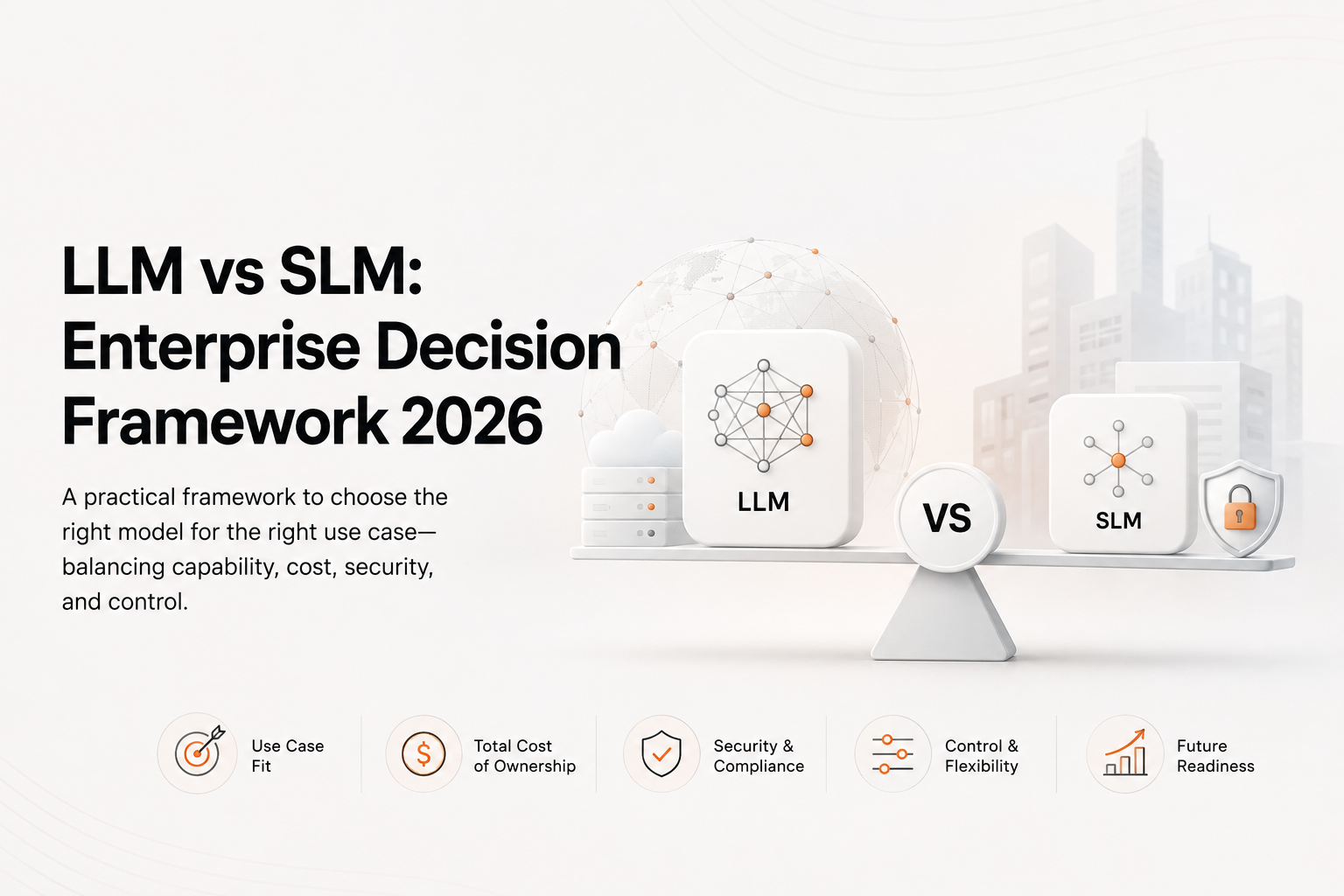
Keep costs in check: right-sized models for each task, so running costs stay low as usage grows. See our LLM vs SLM decision framework.
WRITTEN BY
Harsh Singh Rajput
Senior technical Content writer
Frequently Asked Questions
Can AI agents work with legacy systems?
How do you integrate AI into legacy systems?
How is AI being used in legacy system modernization?
How much does legacy system modernization cost?
What is an AI-native system?
How many companies still use legacy systems?
Why may 40% of agentic AI projects be canceled by 2027?
What are the best strategies for migrating legacy systems?
Further Reading

Stay at the forefront of innovation.
innovation.
Join our inner circle of industry leaders and get exclusive insights delivered to your inbox every Thursday morning.
WE RESPECT YOUR PRIVACY. NO SPAM, EVER.