AI Workflow Automation for Small Business in 2027: Where to Start, Costs and ROI
Most small businesses use AI, but few have automated real workflows. This 2027 guide shows which workflows to automate first, what AI automation really costs, how to calculate ROI and which rules apply in the US, UK, UAE, Saudi Arabia, Canada and Australia.
Hansraj
PRINCIPAL ARCHITECT11 MIN READ
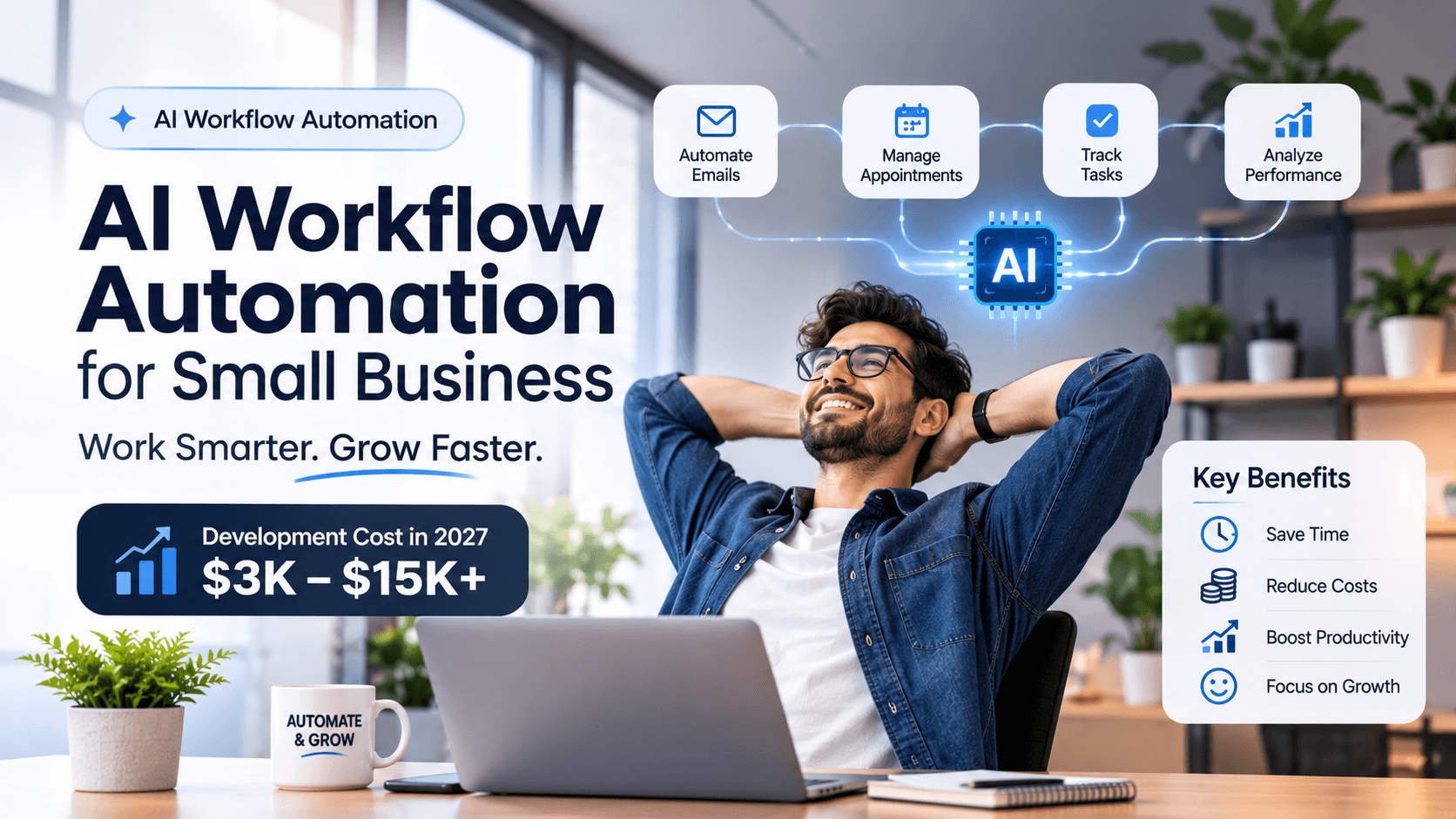
AI workflow automation for small business means using AI models and automation tools to run repetitive processes such as lead follow-up, scheduling, invoicing and support triage with minimal manual work. In 2027, a single automated workflow typically costs $1,900 to $7,700 to build, a multi-workflow department suite $7,700 to $24,000, and AI agent automation $24,000 to $58,000+. Most well-chosen first workflows pay back in 3 to 9 months.
Most small businesses have already tried AI. Far fewer have turned it into real, measurable savings. Goldman Sachs' 10,000 Small Businesses Voices survey (March 2026) found that 76% of small businesses use AI, but only 14% have it fully built into core operations. That gap, between using a chatbot and running a process on autopilot, is where AI workflow automation pays off.
This guide explains where to start, which workflows to automate first, what it really costs in 2027, how to calculate ROI, and which rules apply in the USA, UK, UAE, Saudi Arabia, Canada and Australia.
What Is AI Workflow Automation for Small Business?
Traditional automation follows fixed rules: when a form is submitted, add a row to a spreadsheet. AI workflow automation adds a model that can read, classify, summarise and decide within limits. For example, it can read an inbound email, work out whether it is a sales lead, a support issue or an invoice, pull the right details, update your CRM or accounting system and draft a reply for a person to approve.
There are three levels, and most small businesses should climb them in order:
Level 1: AI assistants. Tools like Microsoft 365 Copilot or ChatGPT Business that help individuals write, summarise and analyse. Fast to adopt, but they do not run processes on their own.
Level 2: AI-powered workflows. Trigger-based flows on platforms like Zapier, Make or n8n, with an AI step in the middle (classify, extract, draft). This is where most SME savings come from.
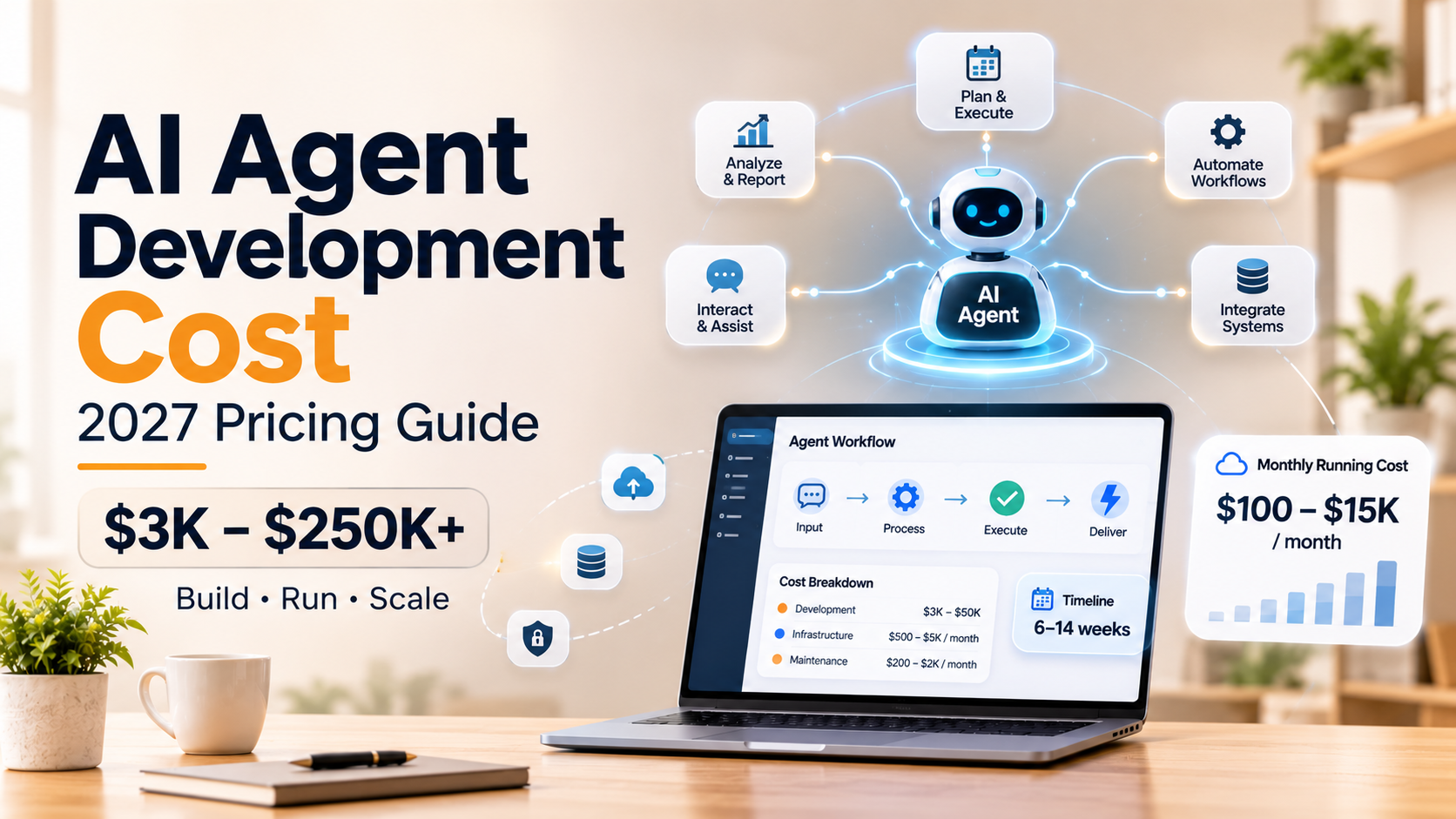
Level 3: AI agents. Systems that plan multi-step tasks, use several tools and act across your software with guardrails and human approval. Powerful, but they need more engineering. Our AI agent development cost guide covers this level in depth.
Why 2027 Is the Year SMEs Move From Experiments to Workflows
Adoption is no longer the barrier. Results are. The latest data across our target markets shows a clear pattern of wide use but shallow integration:
Market | Latest SME / business AI data | Source |
|---|---|---|
USA | 77% of small businesses use AI regularly, up from 48% in July 2024; 78% report better productivity | Intuit QuickBooks AI Impact Report, May 2026 |
USA | 58% of small businesses use generative AI, up from 40% in 2024 | US Chamber of Commerce, Aug 2025 |
UK | 28% of firms with 0 to 9 staff use AI vs 49% of firms with 250+; only 10% of adopters use it extensively | ONS, Jul 2026 |
UK | 65% of non-adopters say they see no clear ROI | UK Government AI Adoption Survey, Oct 2026 |
Canada | 19.2% of businesses used AI in Q2 2026, up from 6.1% in 2024 | Statistics Canada, Jun 2026 |
Australia | 43% of SMEs use AI | National AI Centre SME AI Pulse, early 2026 |
Saudi Arabia | 33.1% of establishments used AI in 2025 | GASTAT, reported Jun 2026 |
UAE | 87% of SMBs surveyed are using or experimenting with AI (small sample) | Salesforce SMB Trends |
The takeaway: the small businesses that win in 2027 will not be the ones with the most AI subscriptions. They will be the ones that wire AI into two or three core processes and measure the hours saved.
Where to Start: The 5-Step SME Automation Roadmap
List your repetitive work. Ask each team member to log tasks they repeat weekly for two weeks, with rough time spent. You are looking for high volume, clear rules and a single owner.
Score each task. Rate it 1 to 5 on hours per week, error cost, data readiness and customer impact. Multiply hours saved by loaded hourly cost to get a rough yearly value.
Pick one pilot workflow. Choose the highest score that does not make final decisions about people. Write the current process down step by step before anyone builds anything.
Build with a human in the loop. For the first 30 days, let the AI draft and a person approve. Track accuracy, time saved and exceptions.
Scale what works. Once the pilot hits its target, remove approval steps where accuracy is proven, then move to the next workflow. Reuse the same connections and prompts.
The Best First Workflows to Automate
Intuit's 2026 data shows US small businesses using AI start with marketing (45%), customer service (37%) and bookkeeping (35%). Statistics Canada reports data analytics, text analytics and chatbots as the top uses. In practice, these workflows deliver the fastest wins:
Workflow | What the AI does | Typical time saved | Difficulty |
|---|---|---|---|
Lead capture and follow-up | Qualifies web, WhatsApp and email leads, updates the CRM, sends a personalised first reply within minutes | 5 to 10 hrs/week | Low |
Scheduling and reminders | Books, reschedules and reminds by SMS, email or WhatsApp; cuts no-shows | 3 to 8 hrs/week | Low |
Invoice processing and payment chasing | Extracts invoice data, matches POs, posts to accounting software, sends polite reminders | 4 to 12 hrs/week | Medium |
Support triage | Classifies tickets, answers common questions, routes the rest with a summary | 6 to 15 hrs/week | Medium |
Client onboarding | Collects documents, checks completeness, creates accounts and folders | 3 to 6 hrs/week | Medium |
Weekly KPI reporting | Pulls data from several tools and writes a plain-English summary | 2 to 5 hrs/week | Low |
Time savings are indicative ranges for a 10 to 50 person business and depend on volume and data quality.
How Much Does AI Workflow Automation Cost in 2027?
We benchmarked current 2026 pricing from leading automation agencies and cost guides and set our ranges slightly below the market to reflect lean, realistic budgets for small businesses:
Scope | What you get | Build cost (USD) | Timeline |
|---|---|---|---|
DIY no-code stack | Your team builds simple flows on Zapier, Make or n8n | $0 to $2,900 setup help | Days |
Automation audit and roadmap | Process mapping, scoring, ROI model, tool choice | $2,900 to $11,500 | 1 to 3 weeks |
Single AI workflow | One process end to end with an AI step, error handling and logging | $1,900 to $7,700 | 1 to 3 weeks |
Multi-workflow suite | 4 to 8 connected workflows for one department | $7,700 to $24,000 | 4 to 8 weeks |
AI agent automation | Agents working across CRM, ERP, email and documents with approvals | $24,000 to $58,000+ | 8 to 14 weeks |
In the UK, expect a single connected process to land around £4,800 to £9,600 at local agency rates. Gulf projects that need Arabic and English handling usually add 15% to 25% for bilingual prompts, testing and right-to-left interfaces.
Monthly running costs
Cost item | Typical 2026 price |
|---|---|
Zapier Professional | From $19.99/month (annual billing, 750 tasks) |
Make Core | From about $12/month (annual billing) |
n8n Cloud Starter | From €20/month (annual billing); Community Edition free to self-host |
Microsoft 365 Copilot Business | $21/user/month |
ChatGPT Business | About $20/user/month (annual billing) |
AI model API usage | $20 to $200/month for most SME volumes |
Support and improvement retainer | $480 to $1,900/month (optional) |
Software prices change often, so confirm current plans before you budget. A good rule: total running costs for an SME should stay under 15% of the yearly value the automations create.
How to Calculate AI Automation ROI (Worked Example)
Take a 15-person services firm in which three staff spend about 8 hours a week each on lead follow-up, scheduling and invoice chasing: 24 hours a week in total.
Hours automated: 60% of 24 hours = 14.4 hours a week, or about 690 hours a year (48 working weeks).
Value: 690 hours x $35 loaded hourly cost = about $24,200 a year.
Build cost: a 3-workflow suite at $12,000.
Running cost: $300 a month in tools and API usage = $3,600 a year.
Net monthly saving: ($24,200 - $3,600) / 12 = about $1,720.
Payback: $12,000 / $1,720 = about 7 months. Year-one net gain: about $8,600; year two: about $20,600.
Hours saved are not the only return. Faster lead response, fewer missed payments and fewer data entry errors often matter more. Track at least one revenue metric (for example, lead-to-meeting rate) alongside hours saved.
Zapier vs Make vs n8n vs Custom: Which Should You Choose?
Option | Best for | Watch out for |
|---|---|---|
Zapier | Non-technical teams, quick wins, widest app library | Costs rise quickly with task volume |
Make | Visual multi-step logic at lower cost per operation | Steeper learning curve for complex scenarios |
n8n | Data control, self-hosting, AI agent workflows, GCC data residency | Self-hosting needs someone to maintain servers and security |
Custom code | High volume, regulated data, unique processes, deep ERP links | Higher upfront cost; needs an engineering partner |
A common and sensible path: prove value on a no-code tool, then move the workflows that become business-critical into a governed n8n or custom setup. If you already pay for Microsoft 365, test Copilot first, because it may cover simple drafting and summarising needs at no extra build cost. For assistant-style use cases, see our ChatGPT integration services.
Country Rules to Know Before You Automate
Most SME workflows (scheduling, reporting, invoice matching) carry low regulatory risk. Rules tighten when automation makes significant decisions about people or processes personal data at scale.
Country | What matters in 2026 to 2027 |
|---|---|
USA | Colorado replaced its AI Act with the ADMT Act (SB 26-189), effective 1 January 2027, requiring notice, explanations of adverse decisions and human review. State privacy laws apply to customer data. |
UK | Data (Use and Access) Act reforms in force since 5 February 2026: solely automated decisions are allowed if you inform people, let them contest and offer human intervention. UK GDPR still applies. |
UAE | Federal PDPL (Decree-Law 45/2021) onshore; DIFC and ADGM have separate data protection laws. A new Federal Authority for AI and Data was announced in June 2026. |
Saudi Arabia | PDPL enforced since 14 September 2024; SDAIA has issued enforcement decisions and fines can reach SAR 5 million. Draft amendments to the implementing regulation went to consultation in October 2026. |
Canada | PIPEDA and Quebec Law 25 apply now; Bill C-36 (tabled June 2026) would add automated decision transparency. |
Australia | From 10 December 2026, privacy policies must disclose substantially automated decisions that significantly affect individuals. |
Selling into the EU? The EU AI Act's Digital Omnibus moved most high-risk obligations to 2 December 2027, with extended relief for SMEs. This is general information, not legal advice.
Common Mistakes That Kill SME Automation Projects
Automating a broken process. If the manual process is unclear, automation only makes the confusion faster. Fix and document it first.
No owner after launch. Every workflow needs a named person who reviews exceptions and approves changes.
Skipping error handling. APIs change and fields go missing. Build alerts, retries and a fallback to a person.
Measuring nothing. Record a baseline (hours, response time, error rate) before you start, or you will never prove ROI.
Letting AI act without limits. Use approval steps for anything that sends money, changes records in bulk or messages customers in new ways.
How iSkylar Helps Small Businesses Automate
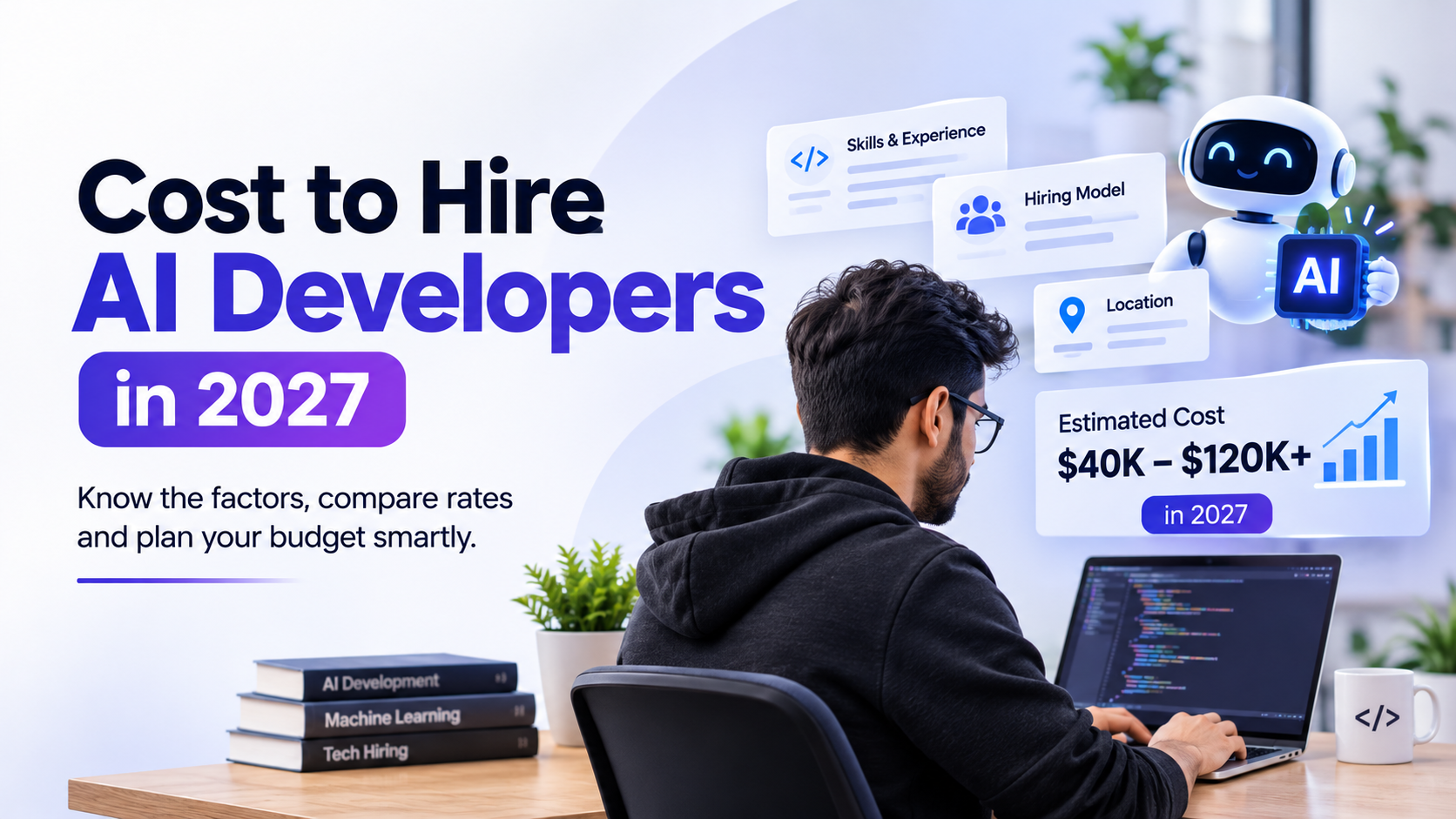
iSkylar designs and builds AI workflows and agents for growing businesses across the USA, UK, Gulf, Canada and Australia. We start with a short audit, ship one pilot workflow with human review, and scale only what proves its value. Explore our agentic AI services, see how we work through flexible engagement models, or hire AI developers to extend your own team.
WRITTEN BY
Hansraj
Leads marketing, growth and go-to-market strategy at iSkylar, helping founder's scope and launch on-demand and marketplace apps.
Frequently Asked Questions
How much does AI workflow automation cost for a small business in 2027?
What should a small business automate first with AI?
How long does it take to see ROI from AI automation?
Zapier, Make or n8n: which is best for a small business?
Do I need a developer to build AI automations?
Is AI workflow automation worth it for a team of under 10 people?
What AI automation rules apply in the UAE and Saudi Arabia?
Which countries now regulate automated decisions by small businesses?
Further Reading
Stay at the forefront of innovation.
innovation.
Join our inner circle of industry leaders and get exclusive insights delivered to your inbox every Thursday morning.
WE RESPECT YOUR PRIVACY. NO SPAM, EVER.
Updated At: