

100K+ Downloads, Two Sides, One Platform: How We Built a Marketplace App That Scaled
How iSkylar built a two-sided marketplace app: customer and provider apps on one backend, a matching engine, commission and payouts, scaled to 100K+ downloads.
100K+
App Downloads
3
Apps on One Backend
300+
Services Matched
Multi-City
Marketplace Operations
A home services startup needed more than a booking app. It needed a two-sided marketplace app that could bring households and verified professionals together, match them in minutes, move money fairly between them and keep both sides coming back. iSkylar handled the marketplace app development: three apps on one cloud backend, a matching engine, in-app payments with commission and payouts, and ratings in both directions. The marketplace matched requests across 300+ services, ran in multiple cities and passed 100K+ downloads.
Two customers, one platform
Most apps have one user to please. A marketplace has two, and they want different things. Households wanted a reliable professional at a fair price, quickly. Professionals wanted steady work, clear pay and as little admin as possible. If either side lost interest, the other had no reason to stay.
The founders had already built the service and recruited the professionals. What they needed was the marketplace layer: the system that lets thousands of strangers find, trust and pay each other again and again without the operations team standing in the middle of every job. That is what makes marketplace app development different from building a normal booking app, and it is the part of the business iSkylar built.
Starting with supply: the cold start problem
Every new marketplace faces the cold start problem. Customers will not come without providers, and providers will not come without customers. Marketplaces that get past it usually pick one side, often the harder one to win, and build it first .
The founders chose supply. Professionals were recruited and verified in each area before customers were invited to book, which meant the platform had to support provider onboarding from the very first release, long before demand was flowing. It paid off: the first customers in each area found real availability, and a first booking that works is what turns into a second one. Supply and demand grew together from there.
What we built
The marketplace app architecture rests on one idea: separate apps for each side, one backend for everything.
Part | Who uses it | Role in the marketplace |
|---|---|---|
Customer app (Android and iOS) | Households | Find a service, see the price, book, track, pay and rate |
Provider app | Service professionals | Receive job alerts, accept work, navigate, complete jobs, see earnings and rate customers |
Admin dashboard | Marketplace operator | Manage services, prices, cities, provider onboarding, disputes, refunds and payouts |
Cloud backend and REST API | All three apps | One source of truth for users, bookings, payments and ratings |
One backend for every app
Running the customer and provider app on one backend matters more than it sounds. All three apps call a single REST API that reads and writes one database. When a provider accepts a job, the customer sees it at that moment because both apps are reading the same record. When a payment completes, the provider's earnings, the platform's commission and the admin reports update from the same transaction. Nothing has to be synced, so nothing falls out of step.
For founders, this is the cheapest marketplace platform development decision to make early and the most expensive one to reverse later.
A matching engine the operations team could tune
The marketplace matching engine decides which providers see which requests. When a customer books, it filters providers by the skill the job needs, whether the address falls inside their service area, their availability for the chosen slot and their account status, so only verified, active providers are included. Location checks use Google Maps Platform, and eligible providers receive a job alert through Firebase Cloud Messaging. The first suitable acceptance wins.
Matching rules live in the backend, not in the apps, so the operations team can adjust them without an app release, for example by widening a service area where supply is thin. That flexibility protects marketplace liquidity: the share of requests that become completed jobs.
Commission and payouts
Customers pay the platform in the app through Razorpay, the payment gateway, using cards, UPI, net banking or wallets. Each completed job records three amounts: what the customer paid, the platform's take rate and the provider's earnings. Providers see their earnings per job in the provider app, and payouts are settled on a set cycle from the admin dashboard. Getting marketplace commission and payouts right is where many marketplaces lose either money or trust; here, both sides could always see where every payment went.
The same design leaves room for the two common payment models. Split payments divide each transaction between platform and provider at the moment of payment, which suits many providers and simple prices. Escrow holds funds until the work is confirmed, which suits higher-value jobs, product sales and freelance work.
Keeping transactions on the platform
Platform leakage, where customers and providers meet through the app and then deal directly, is one of the most common reasons marketplaces struggle to make money . We reduced it by making the app the easiest way to rebook: upfront prices left nothing to negotiate offline, in-app payments removed the need to share bank details, ratings only built up for jobs booked through the app, and service guarantees only covered platform bookings.
Trust on both sides
Customers rated providers after every job, and providers rated customers too. Two-way ratings let the operations team spot problems on either side early, from a provider whose scores were slipping to a customer who regularly cancelled at the door. Together with verified provider onboarding, clear job histories and admin tools to pause accounts and settle disputes, they formed the platform's marketplace trust and safety layer. In a service marketplace, where a stranger enters someone's home, that layer is essential.
Launching city by city
Scaling a marketplace app is not only about servers. Each city is its own small marketplace with its own balance of supply and demand. The platform made cities, service areas, prices and provider pools configurable from the admin dashboard, so each launch could repeat the supply-first approach without new code. One marketplace app for multiple cities ran from a single cloud backend on AWS.
Tech stack
Layer | Technology |
|---|---|
Mobile apps | Android (Java), iOS (Swift) |
Backend and REST API | PHP (Laravel) |
Data | MySQL, Redis |
Infrastructure | AWS |
Matching and location | Google Maps Platform |
Notifications | Firebase Cloud Messaging |
Results
100K+ downloads across Android and iOS
3 apps on one backend: customer app, provider app and admin dashboard
300+ services matched to verified providers through one matching engine
Multiple cities run from one platform, each launched from the admin dashboard
Featured by Apple as a trending Lifestyle app in 2015, 2016 and 2017
The same architecture, other marketplaces
This was a service marketplace app, but the pattern of separate apps for each side, one backend, matching, payments and two-way ratings powers most marketplace types. What changes is what is being exchanged.
Marketplace type | Familiar example | What changes |
|---|---|---|
Service marketplace | This platform | Matching by skill, location and time slot |
Product marketplace | Etsy | Listings, inventory, shipping and order tracking; escrow or delayed payouts protect buyers |
Rental marketplace | Airbnb | Availability calendars, deposits and date-based pricing |
B2B marketplace | Wholesale and procurement platforms | Bulk pricing, quotes, invoices and company accounts |
Freelance marketplace | Upwork | Proposals, milestones and escrow-based payments |
Peer-to-peer marketplace | Uber | Users can sit on both sides; identity checks matter even more |
That is why we treat a multi-vendor marketplace app and an on-demand marketplace app as variations of one architecture rather than separate products.
What we would build differently today
The architecture would stay. Around it, we would add real-time services in Node.js for live job status and chat, ranking that weighs distance, rating and response time, automated identity checks to speed up provider onboarding, split payments and escrow built in from the start, and fake-review detection to protect two-way ratings.
Takeaways for founders
Win one side first. Supply first, in one small area, is the fastest way past the cold start problem.
One backend, many apps. Each side gets its own app; everything shares one source of truth.
Keep matching rules in the backend. You will tune them constantly, so keep them out of app releases.
Design payments around leakage. Upfront prices, in-app payments and guarantees keep transactions on the platform.
Rate both sides. Two-way ratings are the cheapest trust tool you have.
About this project
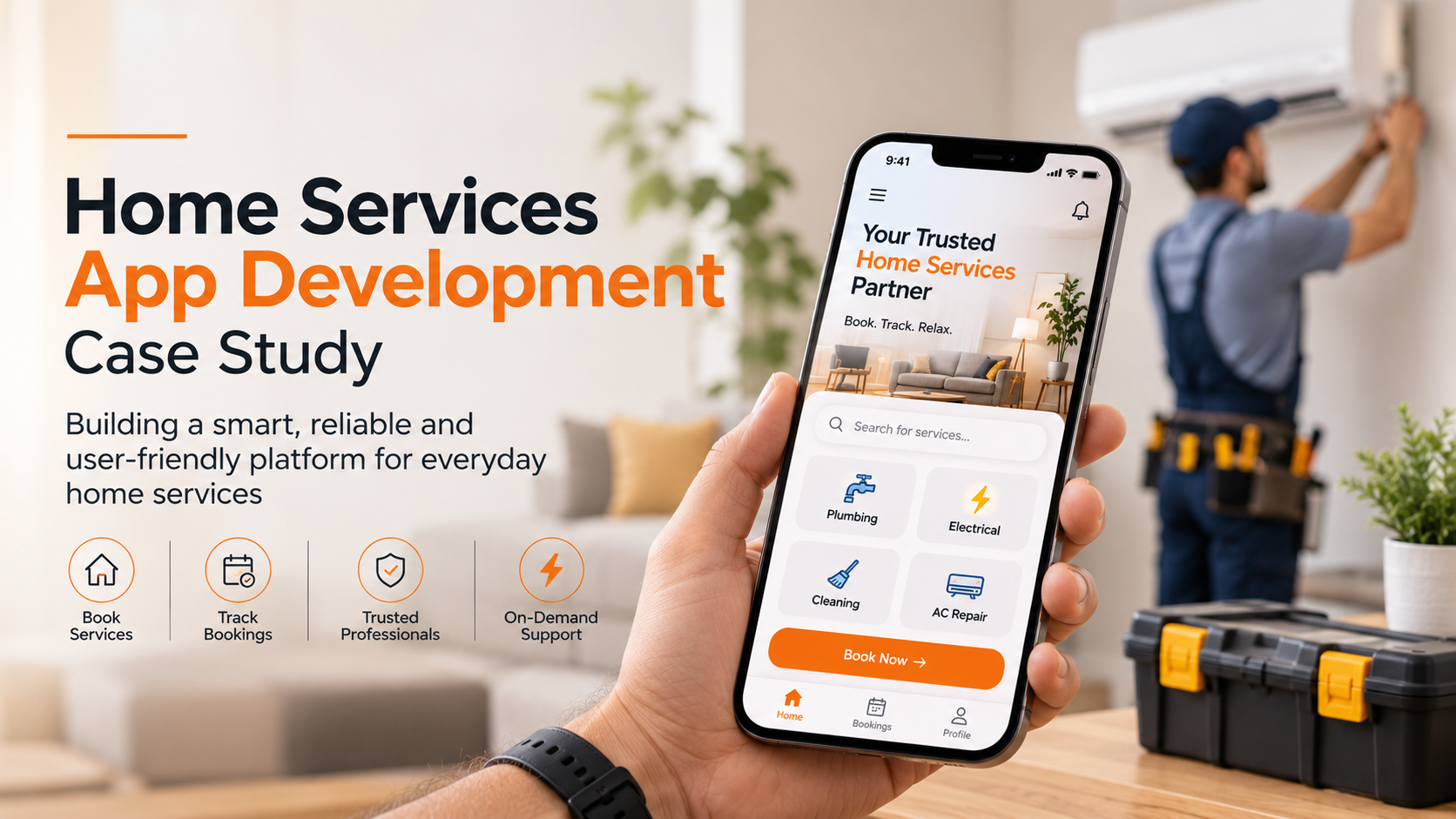
The platform behind this marketplace app case study is Mr. Right, an on-demand home services marketplace based in India. For the business side of the story, read our home services app development case study. If you want to build a two-sided marketplace app, iSkylar is a marketplace app development company that delivers through our marketplace development and custom software development practices, including B2B and B2C portals. You can also extend your team with our full-stack developers or Node.js developers.
Planning a marketplace of your own?
Bring the market. We will build the platform that connects both sides.
Frequently asked questions
How do customer and provider apps share one backend?
Both apps call the same REST API, which reads and writes one database. A booking, job status, payment or rating is recorded once, so both sides and the admin dashboard always see the same information.
How does a marketplace match requests to providers?
A matching engine filters providers by skill, location, availability and account status, then alerts the eligible ones. The rules sit in the backend so the operator can change them without an app update.
How do marketplace apps handle commission and payouts?
The customer pays through the app, the platform keeps its take rate, and the provider's share is paid out on a set cycle. Higher-value or product marketplaces often add escrow, holding funds until delivery is confirmed.
Can one marketplace architecture work for products and rentals?
Yes. The same structure supports service, product, rental, B2B, freelance and peer-to-peer marketplaces. Product marketplaces add inventory and shipping; rental marketplaces add calendars and deposits.
Should I build a custom marketplace or use a white-label platform?
A white-label platform is a cheap way to test demand. Custom marketplace development pays off when your matching, pricing or trust rules are what set you apart. Our app cost calculator and engagement models help you compare the options.
Recommended For You

Solutions & Industry Insights that might interest you
Ready to write your own
success story?
Partner with iSkylar Technologies to achieve exceptional outcomes through innovative software solutions.
Updated At: