How to Build a RAG Knowledge Assistant for Your Business: 2027 Architecture and RAG Development Cost
A RAG knowledge assistant turns your company documents into instant, cited answers. See the 2027 architecture, real RAG development cost from $6K proof of concept to $180K+ enterprise builds, monthly running costs, timelines and compliance for the USA, UK, UAE, Saudi Arabia, Canada and Australia.
Harsh Mangal
PRINCIPAL ARCHITECT10 MIN READ
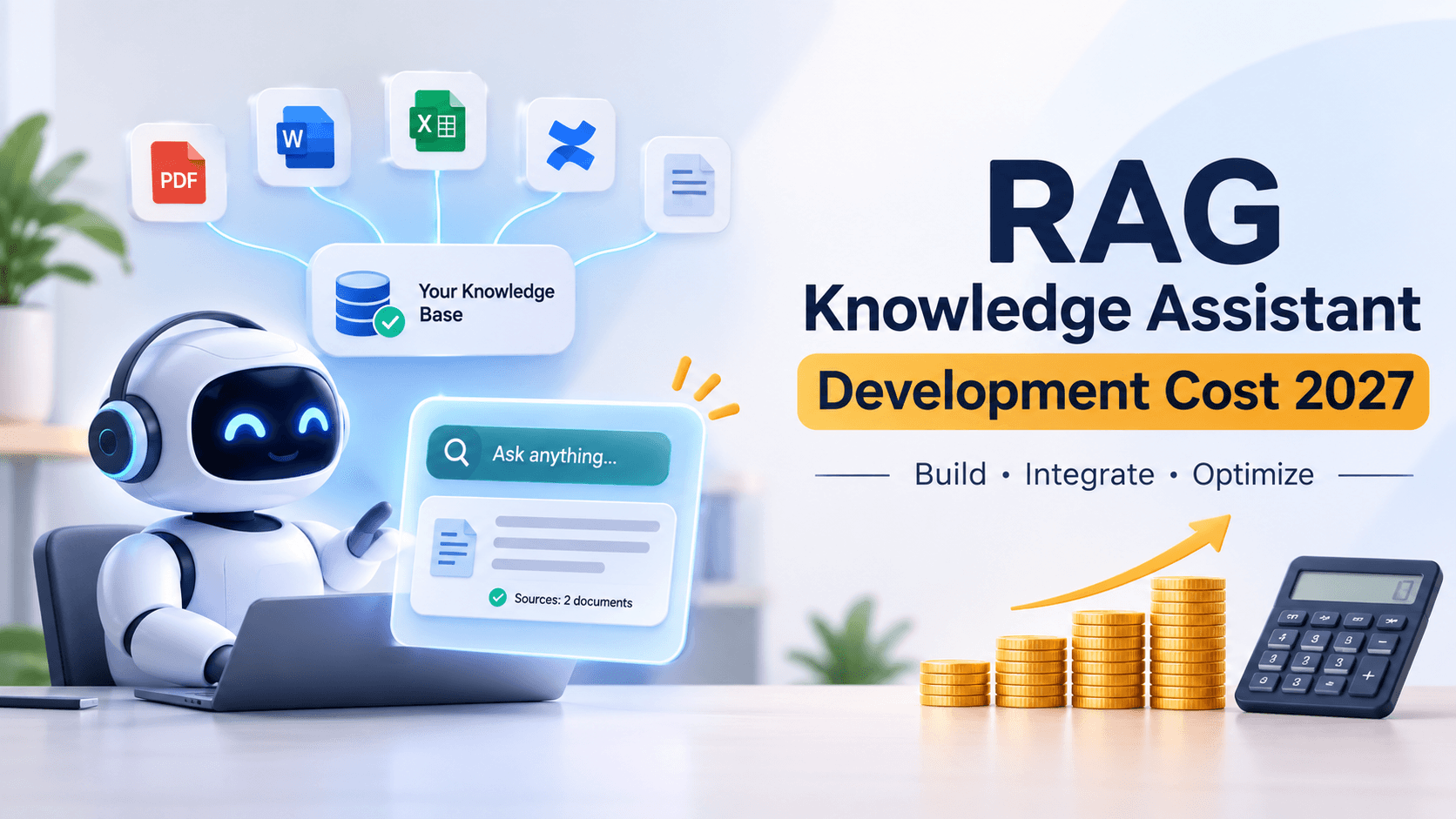
RAG development cost for a business knowledge assistant (retrieval-augmented generation) is $6,000 to $15,000 for a proof of concept, $20,000 to $45,000 for a production assistant on one knowledge domain, $45,000 to $90,000 for a multi-source assistant with permissions and audit trails, and $90,000 to $180,000+ for an enterprise or agentic platform. Most production builds take 8 to 18 weeks and cost $300 to $2,500 a month to run. Data preparation, not the AI model, is usually the biggest cost driver.
Last updated: November 16, 2026
Every company has the same problem. The answers already exist, in a policy PDF, a Confluence page, a SharePoint folder, a ticket from 2023, but nobody can find them fast. McKinsey research found that knowledge workers spend roughly 1.8 hours a day searching for and gathering information. A RAG knowledge assistant turns that pile of documents into a system that answers questions in plain language, with citations, in seconds.
This guide explains how a RAG knowledge assistant works, the architecture we recommend for 2027, what it really costs to build and run, how long it takes, and what changes if you operate in the USA, UK, UAE, Saudi Arabia, Canada or Australia.
What Is a RAG Knowledge Assistant?
A RAG knowledge assistant is an AI system that retrieves relevant passages from your own documents and data, then uses a large language model (LLM) to write an answer grounded in those passages. Instead of relying on what the model memorised during training, it looks things up in your knowledge base every time, and shows the sources it used.
That makes RAG the default architecture for business AI assistants because it:
Uses your private data without retraining a model.
Stays current: update a document and the next answer reflects it.
Cuts hallucinations by forcing answers to come from retrieved text.
Shows citations, so staff and auditors can verify every answer.
Respects permissions, so a sales rep never sees HR files.
Common Business Use Cases for RAG in 2027
Internal knowledge assistant: HR policies, IT runbooks, SOPs and onboarding answered in Slack or Microsoft Teams.
Customer support copilot: agents get suggested answers from help docs, past tickets and product manuals.
Sales and pre-sales assistant: instant answers from RFP libraries, case studies and pricing rules.
Legal and compliance search: contract clauses, regulations and internal policies with exact citations.
Technical documentation assistant: engineers query architecture docs, code wikis and incident reports.
Bilingual Arabic and English assistant: for UAE and Saudi companies whose documents mix both languages.
RAG Architecture: How a Production Knowledge Assistant Works
A demo RAG app can be built in a weekend. A production one has seven layers, and each layer affects accuracy and cost.
Connectors and ingestion: pull content from SharePoint, Google Drive, Confluence, Notion, Zendesk, databases and file shares, with scheduled or real-time sync.
Parsing and cleaning: extract text from PDFs, scans (OCR), tables, slides and emails; remove duplicates and outdated versions; redact personal data where required.
Chunking and embeddings: split documents into meaningful sections and convert them into vectors using an embedding model (multilingual if you need Arabic).
Vector and keyword index: store vectors in pgvector, Pinecone, Weaviate or Qdrant, alongside a keyword index for exact terms such as product codes.
Retrieval and re-ranking: hybrid search (semantic plus keyword), metadata filters and a re-ranker choose the best 5 to 10 passages.
Generation with guardrails: the LLM answers only from retrieved context, cites sources, and says "I don't know" when confidence is low.
Evaluation and monitoring: test sets, answer-quality scoring, user feedback, cost tracking and audit logs.
What Changed for RAG Between 2025 and 2027
Hybrid retrieval is now standard. A VentureBeat Pulse survey of enterprise AI teams (Q1 2026) found the share planning hybrid retrieval jumped from 10.3% to 33.3% in one quarter, as pure vector search hit accuracy limits at scale.
Agentic RAG lets the assistant plan multi-step lookups, query several sources, and call tools such as a CRM or ticketing system, often through the Model Context Protocol (MCP).
GraphRAG adds a knowledge graph of entities and relationships, useful for questions that span many documents, such as "Which suppliers are affected by this regulation?"
Long-context models did not replace RAG. In the same survey, only 6.7% of respondents expected long-context models to become the dominant architecture. Retrieval is still cheaper, faster and easier to audit.
RAG Development Cost in 2027: How Much Does a Knowledge Assistant Cost?
These ranges reflect blended India-based engineering rates for a senior team. US, UK and Australian agencies typically charge 2 to 3 times more for the same scope.
Tier | What You Get | Build Cost | Timeline |
|---|---|---|---|
Proof of concept | One document set, basic chat UI, simple vector search, small test set | $6,000 to $15,000 | 4 to 6 weeks |
Production assistant (one domain) | 2 to 3 sources, hybrid search, citations, SSO, Slack or Teams, evaluation suite | $20,000 to $45,000 | 8 to 12 weeks |
Multi-source assistant with permissions | 5+ connectors, document-level access control, real-time sync, audit logs, analytics, bilingual support | $45,000 to $90,000 | 12 to 18 weeks |
Enterprise or agentic RAG platform | Agentic workflows, GraphRAG, tool calling via MCP, private or self-hosted models, multi-department rollout | $90,000 to $180,000+ | 18 to 28 weeks |
Where the Budget Goes
Work Area | Typical Share of Build Cost |
|---|---|
Data connectors, parsing and cleaning | 25% to 35% |
Retrieval tuning (chunking, hybrid search, re-ranking) | 15% to 20% |
Application, UI and integrations (SSO, Teams, Slack) | 15% to 20% |
Security, permissions and compliance | 10% to 15% |
Evaluation, testing and red-teaming | 10% to 15% |
Deployment, monitoring and handover | 5% to 10% |
Monthly Running Costs
Component | Small (under 10K queries/month) | Mid-size (50K to 100K queries/month) |
|---|---|---|
LLM inference | $30 to $250 | $300 to $2,000 |
Embeddings and re-indexing | $20 to $100 | $100 to $400 |
Vector database | $0 to $150 (pgvector) | $200 to $800 |
Hosting, storage and observability | $150 to $500 | $500 to $1,500 |
Total | $300 to $1,000 | $1,100 to $4,700 |
Self-hosting open-source models (for example Llama or Qwen on your own cloud) raises fixed infrastructure cost but removes per-token fees, and is often required when data cannot leave a country. Budget a further 15% to 20% of the build cost per year for maintenance, model upgrades and retrieval tuning.
What Drives RAG Development Cost Up or Down?
Data quality: clean PDFs in one folder are cheap. Fourteen formats across three legacy systems, scanned forms and spreadsheets are not. LlamaIndex and most practitioners agree document quality, not model choice, is the most common reason RAG underperforms.
Number of sources: each connector with authentication and sync logic adds 1 to 2 weeks.
Access control: mirroring SharePoint or Google Drive permissions at document level adds 2 to 4 weeks but is non-negotiable for most companies.
Accuracy target: moving from "good enough" to 90%+ answer accuracy on a tested question set requires re-ranking, query rewriting and more evaluation cycles.
Languages: Arabic and English retrieval needs multilingual embeddings, Arabic-aware text normalisation and bilingual test sets.
Hosting model: public API, private cloud, or fully on-premise with open-source models.
RAG Compliance by Country: USA, UK, UAE, Saudi Arabia, Canada, Australia
Market | Key Rules to Design For | What It Means for Your RAG Build |
|---|---|---|
USA | HIPAA (health data), GLBA (finance), state privacy laws such as CCPA/CPRA, SOC 2 expectations | BAA-covered model endpoints for PHI, audit logs, data retention controls |
UK | UK GDPR and Data Protection Act 2018, Data (Use and Access) Act 2025, ICO AI guidance | DPIA before launch, lawful basis for staff data, right-to-erasure must also delete vectors |
UAE | Federal Decree-Law 45 of 2021 (PDPL), DIFC and ADGM regimes, sector rules for health and finance | UAE-region hosting for sensitive data, Arabic UI, clear processing records |
Saudi Arabia (KSA) | Saudi PDPL (SDAIA), cross-border transfer rules, NCA cybersecurity controls | In-Kingdom hosting where required, transfer risk assessments, Arabic-first experience |
Canada | PIPEDA and provincial laws such as Quebec Law 25 | Privacy impact assessment, consent and transparency for automated processing |
Australia | Privacy Act 1988 and Australian Privacy Principles, OAIC guidance on AI | Data minimisation, overseas disclosure controls, explainable outputs |
One rule applies everywhere: if a user is not allowed to open a document, the assistant must not quote it. Permission-aware retrieval is a compliance feature, not a nice-to-have.
RAG vs Fine-Tuning vs a Ready-Made Copilot
Option | Best For | Limitations |
|---|---|---|
Off-the-shelf copilot (Microsoft 365 Copilot, Gemini, Glean) | General productivity inside one ecosystem | Per-seat fees, limited control over retrieval, weak on custom systems and Arabic workflows |
Custom RAG assistant | Company-specific knowledge, citations, multiple systems, data residency | Needs upfront build and ongoing tuning |
Fine-tuning | Teaching tone, format or a narrow task | Does not keep facts current, harder to audit, retraining needed when data changes |
For most businesses the answer is custom RAG first, with light fine-tuning later only if a specific output format or style needs it. We compare these in more depth in our LLM fine-tuning services overview.
How to Build a RAG Knowledge Assistant: 6 Steps
Pick one high-value use case (for example "answer HR and IT policy questions") and collect 50 to 100 real questions staff already ask.
Audit your data: which sources, formats, owners, permissions and how often they change.
Build a proof of concept on a single source and measure answer accuracy against your question set.
Harden for production: hybrid retrieval, re-ranking, SSO, permission sync, citations and guardrails.
Evaluate and red-team: test for wrong answers, leaked data, prompt injection and off-topic use.
Launch, measure and expand to new departments using adoption, deflection rate and time saved as KPIs.
How to Measure ROI
Time saved: minutes saved per search multiplied by searches per week and loaded hourly cost.
Ticket deflection: share of internal IT, HR or customer tickets resolved by the assistant.
Answer accuracy: percentage of test questions answered correctly with a valid citation.
Adoption: weekly active users as a share of the target team.
Onboarding speed: days for new hires to reach productivity.
Example: 200 employees each saving 20 minutes a day at a $40 loaded hourly cost recovers about $26,000 a month, which pays back a $45,000 production build in under two months.
Why Most RAG Projects Stall, and How to Avoid It
Gartner predicted that at least 30% of generative AI projects would be abandoned after proof of concept by the end of 2025, citing poor data quality, weak risk controls and unclear business value. The same patterns kill RAG projects:
Skipping data cleaning and indexing outdated or duplicate documents.
No evaluation set, so nobody can prove the assistant is accurate.
Ignoring permissions, which blocks security sign-off.
Launching a generic chatbot instead of solving one painful workflow.
How iSkylar Builds RAG Knowledge Assistants
iSkylar's generative AI development team builds RAG systems with LangChain, LlamaIndex, pgvector, Pinecone and Weaviate, on cloud or self-hosted models. Proofs of concept start from $6,000 (4 to 6 weeks) and production systems from $20,000 (10 to 18 weeks), with a fixed-scope quote before you sign. In one engagement, a SaaS company whose two AI roles had been open for five months shipped a production RAG copilot in 10 weeks with our team.
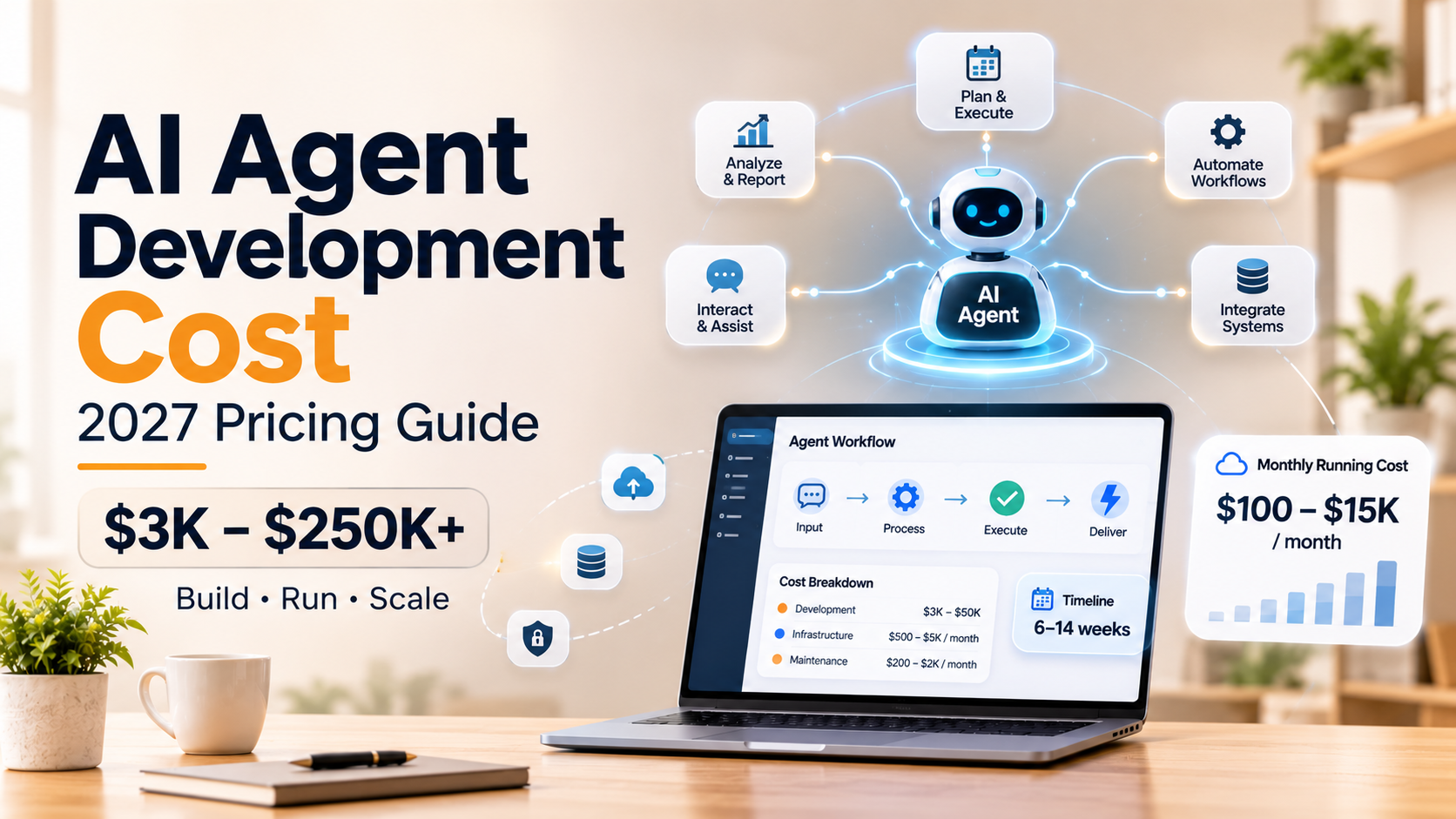
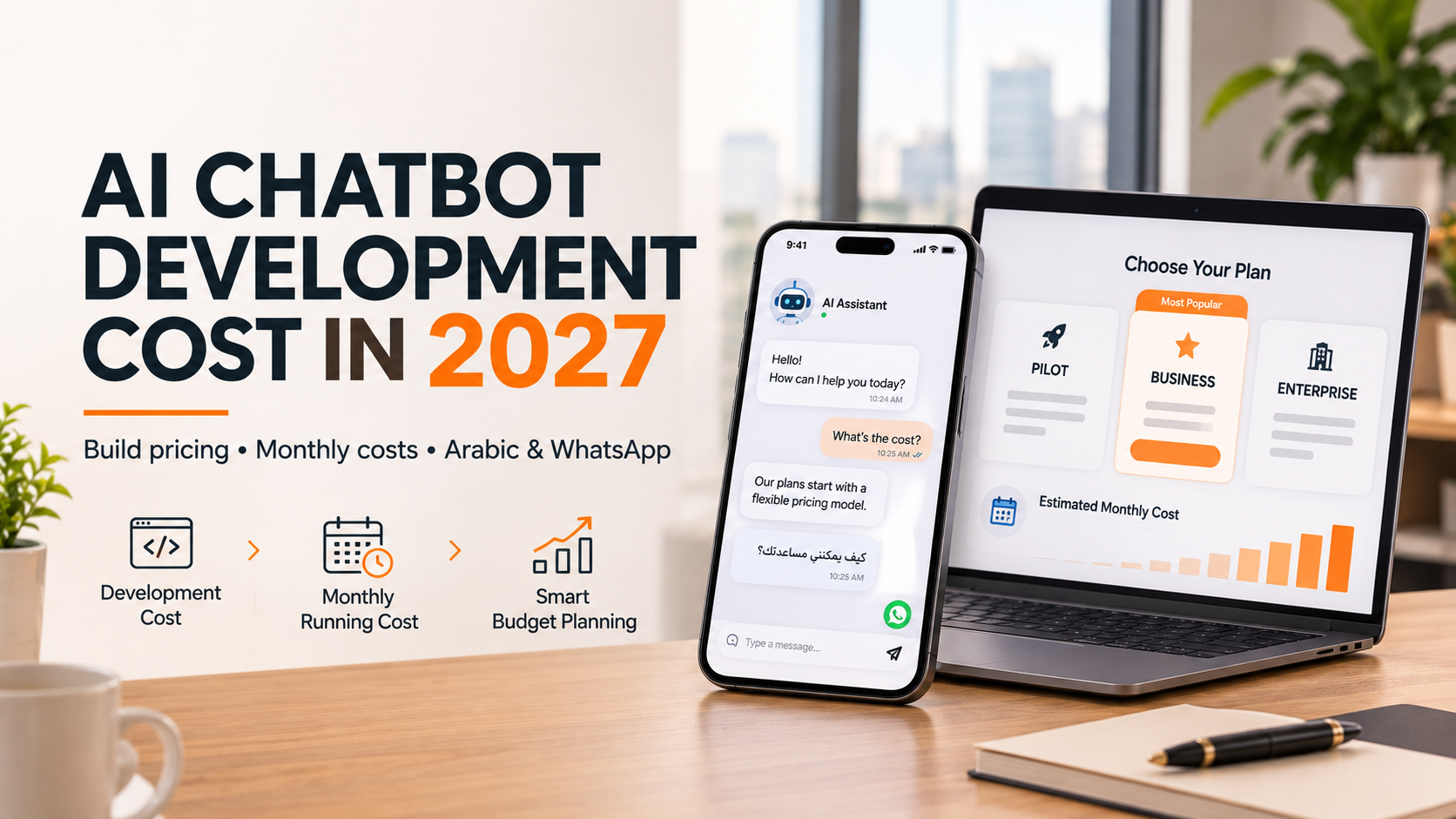
If you want the assistant to take actions, not just answer questions, see our agentic AI services. For customer-facing use, our AI chatbot development team adds channels such as WhatsApp and web chat. You can also read our breakdown of AI agent development cost in 2027.
Ready to Turn Your Documents into Answers?
Book a free 30-minute RAG scoping call with iSkylar. We will review your data sources, estimate accuracy, and give you a fixed-scope quote for a proof of concept or production assistant. Talk to our generative AI team.
WRITTEN BY
Harsh Mangal
Having 8+ years of experience helping founders across the US, UK, Middle East and Australia plan, budget and launch on-demand platforms.
Frequently Asked Questions
How much does it cost to build a RAG system?
How long does it take to build a RAG knowledge assistant?
How much does a RAG assistant cost to run each month?
Is RAG better than fine-tuning for company knowledge?
Can a RAG assistant work in Arabic?
How do you stop a RAG assistant from hallucinating?
What is agentic RAG?
Further Reading
Stay at the forefront of innovation.
innovation.
Join our inner circle of industry leaders and get exclusive insights delivered to your inbox every Thursday morning.
WE RESPECT YOUR PRIVACY. NO SPAM, EVER.
Updated At: